The checkout counter has long been the final, and often slowest, part of the customer experience. Long lines during a holiday rush, a server running back and forth to a stationary terminal, or a contractor unable to take a deposit on-site all represent lost time and potential friction. The solution isn’t to work harder, but to work smarter by untethering your payment process from a fixed location. A wireless credit card reader gives you the freedom to meet your customers where they are. It transforms your payment process from a bottleneck into a flexible, efficient, and professional interaction that improves customer flow and satisfaction, whether you’re busting lines in a retail store or closing a deal in a client’s home.
Key Takeaways
- Offer flexible, modern payments: A wireless reader lets you accept payments anywhere your customers are, creating a faster checkout experience and accommodating essential options like EMV chip and tap-to-pay.
- Prioritize reliability and top-tier security: The right reader must have all-day battery life, an offline mode to prevent lost sales during internet outages, and robust security like encryption to protect every transaction.
- Look beyond the hardware to find a transparent partner: Evaluate a provider’s entire fee structure, including monthly costs and contract terms, and ask if they support cost-saving models like dual pricing to find a solution that benefits your bottom line.
What Is a Wireless Credit Card Reader?
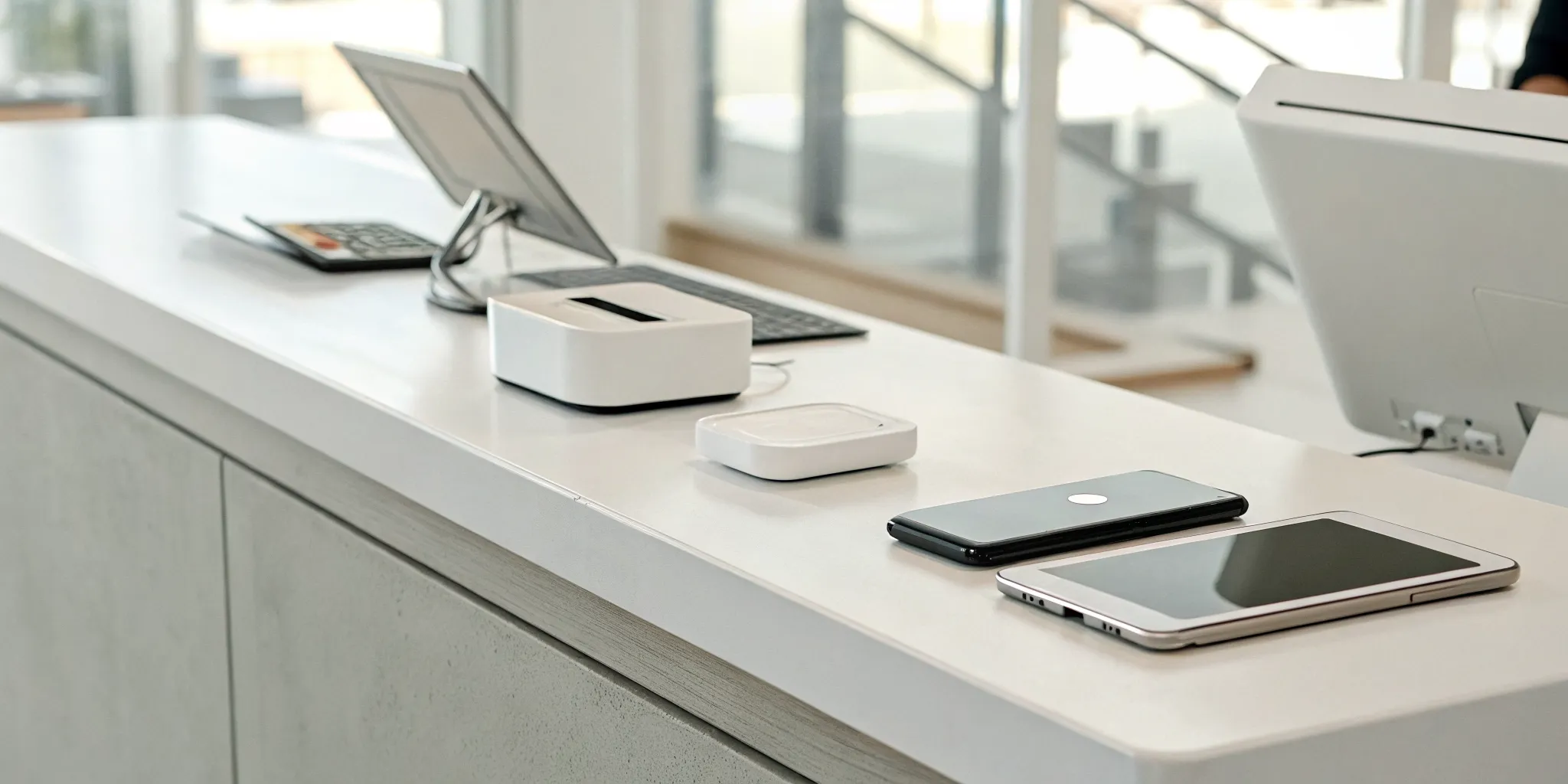
A wireless credit card reader is a portable device that lets you accept credit and debit card payments without being tied to a counter. Think of it as your checkout on the move. These handheld machines, also called portable terminals, give you the freedom to process transactions anywhere your customers are. For a restaurant, this means taking payment right at the table. For a retail store, it means you can check out a customer in the dressing room area or bust long lines during a holiday rush. If you run a mobile business, like a food truck or a landscaping service, it means you can take secure payments on-site. This flexibility not only speeds up the payment process but also creates a smoother, more convenient experience for your customers.
Most modern wireless readers are equipped to handle all types of payments, including traditional magstripe swipes, secure EMV chip cards, and even contactless payments like Apple Pay and Google Pay. Instead of forcing customers to wait in a long queue, you can bring the transaction directly to them. This simple change can make a huge difference in customer satisfaction and operational efficiency. For any business owner looking to improve their checkout flow and appear more modern and professional, a
How do they work?
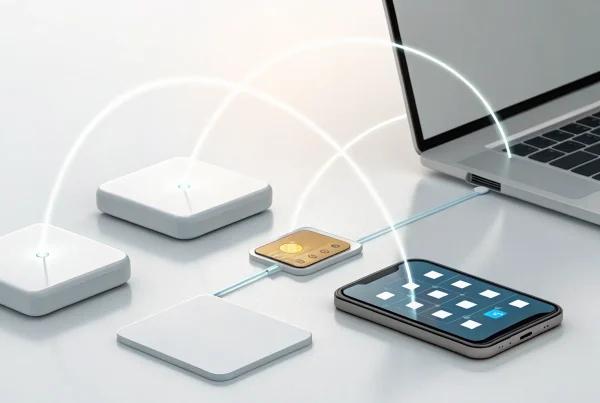
Wireless readers connect to a payment network using a few different technologies. The most common types use Bluetooth or Wi-Fi to communicate. A Bluetooth reader pairs with a base station that is connected to your internet router, allowing you to move freely and accept payments up to about 300 feet away. A Wi-Fi reader connects directly to your business’s Wi-Fi network, giving you reliable coverage anywhere you have a signal. For businesses on the go, like food trucks or mobile service providers, cellular readers with their own SIM cards offer the ultimate freedom, letting you process payments anywhere with a cell signal.
Wireless vs. wired: What’s the difference?
The main difference between wireless and wired terminals is mobility. A traditional wired terminal is physically connected to your phone line or internet connection and your power source, anchoring it to your checkout counter. While reliable, it’s completely stationary. A wireless reader, on the other hand, runs on a rechargeable battery and connects wirelessly, giving you the freedom to move. This allows you to complete sales anywhere in your store, bust long lines during a rush, or take your business on the road. This flexibility is a key reason why many businesses are integrating wireless readers into their POS systems.
What Are the Different Types of Wireless Readers?
So, you’re ready to cut the cord and go wireless. That’s a great move for any business that values flexibility. But “wireless” isn’t a one-size-fits-all solution. The term simply means the reader isn’t physically tethered to a phone line or internet cable. The real question is how it connects to process payments securely. Think of it like choosing an internet plan for your home; you pick the one that best fits your lifestyle. Wireless readers primarily use one of three connection types: Bluetooth, Wi-Fi, or a cellular network (like 4G/LTE).
Your choice will define where and how you can accept payments. A Bluetooth reader is perfect for moving around a single location, like a restaurant patio, while a cellular reader gives you the freedom to sell anywhere with a cell signal, from a craft fair to a client’s home. Wi-Fi readers are a solid middle ground, ideal for established locations with a strong network. Understanding these differences is the first step to finding a device that works as hard as you do. Each type has its own strengths, so the “best” one is really the one that aligns with your daily operations. Before we get into the specifics, it’s helpful to have a good grasp of how a modern point-of-sale (POS) system brings everything together, from payments to inventory.
Bluetooth readers
Bluetooth readers are small, portable devices that pair wirelessly with your smartphone or tablet. They use the internet connection from your paired device to process transactions. This makes them a fantastic and affordable option for businesses on the move within a specific area. Think of a server taking payments tableside, a stylist checking out a client in their chair, or a retail associate helping a customer skip the main checkout line. Because they rely on a host device, their range is limited to the Bluetooth signal, usually around 30 feet. They are a key part of the growing trend of mobile payment processing, offering a simple way to accept cards anywhere you can bring your phone.
Wi-Fi readers
A Wi-Fi reader connects directly to your store’s wireless internet network to process payments. Unlike Bluetooth readers, they don’t need to be paired with a smartphone or tablet to function, giving them more independence. This makes them a reliable workhorse for businesses with a stable Wi-Fi connection, like coffee shops, boutiques, and salons. You get the freedom to move around your entire location without worrying about losing connection, as long as you stay within your Wi-Fi range. They offer a great balance of mobility and stability, providing a seamless checkout experience for customers whether they are at the counter or on the patio.
Cellular (4G/LTE) readers
For the ultimate freedom in payment processing, cellular readers are the answer. These devices have a built-in SIM card and connect to the internet using a cellular network, just like your smartphone. This means you can accept credit card payments virtually anywhere you have cell service, with no need for Wi-Fi or a paired device. They are the go-to choice for truly mobile businesses like food trucks, contractors working on-site, and vendors at farmers’ markets or trade shows. While they might come with a slightly higher price tag or a data plan, the ability to process payments anywhere can be a game-changer, ensuring you never miss a sale, no matter where your business takes you.
Key Features to Look For in a Wireless Reader
Once you start shopping for a wireless reader, you’ll notice they aren’t all built the same. The right device does more than just accept payments; it makes your checkout process faster, keeps customer data safe, and works reliably no matter where you do business. Think of it as a checklist: if a reader doesn’t have these core features, it might not be the right long-term fit for your business.
Choosing a reader is about finding a tool that supports your workflow, not one that complicates it. You need a device that can handle modern payment methods, last through your busiest days, and stay connected even when your internet is acting up. Most importantly, it must protect you and your customers with strong security. A great wireless reader integrates smoothly with your other business software, creating a central system that helps you manage sales, inventory, and customer information without extra effort. Let’s walk through the five non-negotiable features you should look for.
EMV chip & contactless payment support
Your customers expect modern, convenient ways to pay. That’s why your wireless reader absolutely must support both EMV chip cards and contactless payments. EMV is the technology behind inserting a chip card, which offers a much more secure transaction than a simple magnetic swipe. Contactless payments, also known as NFC (Near Field Communication), allow customers to pay by just tapping their card or phone.
This isn’t just about speed; it’s about meeting customer expectations and building trust. When someone can use Apple Pay, Google Pay, or their tap-enabled card, the transaction feels seamless and secure. A reader that only offers a magnetic stripe looks outdated and can slow down your line, so make sure chip and tap-to-pay capabilities are at the top of your list.
All-day battery life and durability
The main advantage of a wireless reader is freedom, but that freedom disappears if you’re constantly searching for an outlet. A reliable reader should have a battery that can easily last through a full business day on a single charge. This is especially critical if you operate a food truck, sell at farmers markets, or provide services at clients’ homes. You need to be able to take payments anywhere, anytime, without worrying about your device dying mid-transaction.
Beyond battery, look for a reader that’s built to last. A small, pocket-sized device is great for portability, but it also needs to be durable enough to handle the occasional bump or drop. Your card reader is a core piece of your business equipment, so choose one that’s tough enough for your daily grind.
Reliable connectivity and offline mode
Spotty Wi-Fi can bring a business to a grinding halt, but it doesn’t have to. The best wireless readers offer flexible connectivity options, like Bluetooth and Wi-Fi, but the real game-changer is an offline mode. This feature allows you to continue accepting card payments even when your internet connection goes down. The reader securely stores the transaction details and automatically processes them as soon as you’re back online.
An offline mode is your safety net against lost sales and customer frustration. Whether you’re at an outdoor event with weak reception or your shop’s internet is unreliable, this feature ensures you can always complete a sale. It provides peace of mind and keeps your revenue flowing without interruption, making it an essential function for any modern business.
Top-tier security and encryption
When you handle customer payments, security is your number one responsibility. A trustworthy wireless reader must have top-tier security features built right in, including end-to-end encryption and tokenization. Encryption scrambles sensitive card information the moment it’s captured, making it unreadable to fraudsters. Tokenization then replaces that data with a unique, non-sensitive token for processing.
These technologies work together to protect both you and your customers from data breaches and fraud. Your payment provider should also be fully PCI compliant, which means they adhere to strict industry standards for securing card data. Never compromise on security; choose a reader that makes protecting payment information a top priority, so you can focus on running your business.
Seamless POS and software integration
Your wireless reader doesn’t operate in a vacuum. It’s part of a larger ecosystem that includes your Point of Sale (POS) system, inventory management, and customer relationship tools. That’s why seamless integration is so important. A reader that connects effortlessly with your POS software helps you run your entire business more efficiently.
When your reader and POS work together, every sale automatically updates your inventory, tracks sales data, and logs customer information. This eliminates the need for manual data entry, reduces errors, and gives you a clear, real-time view of your business performance. Before committing to a reader, confirm it’s compatible with the software you already use or that the provider offers a complete, integrated solution.
Finding the Best Wireless Reader for Your Small Business
Okay, you’re sold on the idea of a wireless reader. But with so many options out there, how do you pick the one that’s actually right for your business? The truth is, the “best” reader isn’t a one-size-fits-all device. It’s the one that fits your unique workflow, budget, and customer needs. Let’s walk through how to find your perfect match by focusing on what really matters: the right partner, the right features, and asking the right questions from the start.
The MBNCard solution
Portable credit card readers give you the freedom to accept debit and credit card payments anywhere your business takes you, whether that’s at a pop-up market, a client’s home, or just away from the front counter. Many of these devices are also contactless, making checkout even faster for your customers. At MBNCard, we don’t just hand you a box. We work with you to understand your specific needs and match you with a reliable, secure, and affordable wireless terminal. Our goal is to provide a solution that helps you make sales efficiently, not one that adds another headache to your day.
Comparing features and support
When you start comparing models, the tech specs can feel a little overwhelming. Focus on the essentials. Your reader absolutely must support EMV chip cards and NFC contactless payments like Apple Pay and Google Pay; this is standard now for security and convenience. Also, check what cards it accepts, ensuring it covers major players like Visa, Mastercard, and American Express. Beyond the hardware, consider the support that comes with it. A cheap reader isn’t a good deal if you can’t get help when you need it. Look for a provider who offers responsive, helpful customer service, as this can be just as valuable as the device itself.
What to ask your provider
Before you commit, it’s time to play detective. Having a few key questions ready will help you cut through the sales pitch and find a transparent partner. Ask your potential provider: What are all the fees associated with this reader? Is there a long-term contract? What does the hardware warranty cover? What are your customer support hours and how can I reach you? A trustworthy provider will have clear, direct answers. If you get vague responses or feel like you’re being rushed, that’s a major red flag. We believe you should feel confident and informed about your payment processing, so don’t hesitate to ask us anything. We’re here to help.
Understanding Fees and Pricing Models
Let’s talk about the part of payment processing that can feel the most confusing: the fees. It’s easy to get lost in the jargon, but understanding how you’re charged is the first step to protecting your profits. Most wireless reader providers use one of a few common pricing models. Once you know what to look for, you can compare offers with confidence and find a solution that truly works for your budget. Knowing the difference between these models will help you ask the right questions and avoid surprises on your monthly statement.
Flat-rate pricing
Flat-rate pricing is the simplest model to understand. With this structure, you pay a single, fixed percentage and a small per-transaction fee for every sale, regardless of the card type. For example, some providers charge a fee of 2.6% + 10¢ for each payment you accept. This predictability is a huge plus for new businesses or those that want to easily forecast their expenses without worrying about different rates for different cards. If you value straightforward costs above all else, a flat-rate plan can be a great starting point for your business.
Interchange-plus pricing
Interchange-plus pricing offers more transparency by breaking down your costs. This model passes the direct interchange fee from the card network (like Visa or Mastercard) to you, and then adds a small, fixed markup for the processor. For instance, a provider might charge 2.6% plus 15 cents for in-person payments. While the total fee can vary slightly with each transaction depending on the card used, this model clearly shows you what the processor is making. It’s often a more cost-effective option for businesses with consistent sales volume, as the processor’s markup is typically lower than on flat-rate plans.
How to spot monthly and hidden fees
Beyond the transaction rate, you need to watch out for other charges that can inflate your bill. Some providers add monthly fees, statement fees, or PCI compliance fees. Always ask for a full breakdown of costs before you sign anything. Thankfully, many modern providers are moving toward more transparent pricing. Companies like SumUp and Square build their reputation on having no monthly fees or long-term contracts, which is a great sign. When comparing options, ask providers directly: “Are there any monthly fees, annual fees, or cancellation fees I should know about?” A trustworthy partner will give you a straight answer.
Just How Secure Are Wireless Readers?
It’s a fair question. When you’re handling your customers’ sensitive payment information, security is everything. The good news is that modern wireless readers are built from the ground up with multiple layers of protection. Gone are the days of swiping a simple magnetic stripe and hoping for the best. Today’s devices are packed with advanced technology designed to keep card data safe from the moment a customer taps, dips, or swipes.
Thinking about security isn’t just about the hardware itself. It’s also about the software and the payment processor behind it. A trustworthy provider ensures that every transaction is protected by powerful security measures like encryption and tokenization. They also help you stay compliant with industry standards, taking a lot of the technical weight off your shoulders. This partnership is key. When you combine these backend protections with the security already built into chip cards and contactless payments, you get a system that is significantly safer than older, wired terminals. Let’s break down exactly what these security features are and how they work to protect your business and your customers.
The role of encryption and tokenization
Think of encryption as a secret code for your customer’s card data. The instant a card is dipped or tapped on your wireless reader, its information is scrambled into an unreadable format before it even leaves the device. This ensures that if a fraudster ever managed to intercept the transaction data, they would only see a jumble of useless characters, not a credit card number.
Tokenization takes this protection a step further. After the encrypted data reaches the secure payment processor, the customer’s actual card number is replaced with a unique, randomly generated number called a token. This token is what’s used to process the payment. Your system never stores the real card number, which dramatically reduces your risk. These two features work together automatically on every single transaction, providing 24/7 fraud prevention without you having to lift a finger.
Staying PCI compliant
If you’ve been in business for a while, you’ve probably heard of PCI compliance. The Payment Card Industry Data Security Standard (PCI DSS) is a set of rules all businesses must follow when they accept credit cards. Its goal is to ensure that every company that processes, stores, or transmits cardholder data maintains a secure environment. This might sound intimidating, but using a modern wireless reader from a reputable provider makes it much simpler.
Your payment solutions provider should supply you with equipment and software that is already PCI compliant. They handle the complex security requirements on their end, so you can focus on running your business. This is why choosing the right partner is so important. When you evaluate a provider, look beyond just the price of the reader and consider the support and guidance they offer to help you meet your compliance obligations easily.
Why EMV and contactless are safer
There’s a reason the magnetic stripe is nearly obsolete. EMV chip cards are far more secure. Each time a chip card is used, it creates a unique, one-time-use code for that specific transaction. This makes it almost impossible for criminals to create counterfeit cards from stolen data. With the vast majority of cards now containing chips, accepting EMV payments isn’t just a good idea, it’s essential for protecting your business from fraud liability.
Contactless payments, including tap-to-pay cards and mobile wallets like Apple Pay, use the same secure EMV technology. They transmit encrypted data over a short distance, offering both speed and security. When a customer pays with their smartphone, they also get an extra layer of protection through their device’s passcode or biometric authentication (like a fingerprint or face scan). This combination of speed and advanced security makes contactless a win-win for you and your customers.
Can You Use a Wireless Reader with Dual Pricing?
Yes, you absolutely can, and it’s a fantastic strategy for many businesses looking to manage their expenses. Combining the flexibility of a wireless reader with a dual pricing model can significantly lower your payment processing costs. This approach gives your customers a choice in how they pay while helping you protect your profit margins from card network fees. The key is to ensure your hardware and software are specifically designed to support this pricing structure. Let’s walk through what dual pricing means for your business and how to find the right tech to make it happen.
What is dual pricing?
Dual pricing is a simple method where you offer two different prices for your goods or services. You set a standard price for customers paying with a credit or debit card and a slightly lower price for those who choose to pay with cash. This essentially gives your cash-paying customers a small discount. The model is designed to help you cover the credit card processing fees that are part of every card transaction. By presenting a card price that accounts for this cost, you create a transparent system where you no longer have to absorb those fees yourself.
How dual pricing lowers your costs
Every time a customer swipes, dips, or taps their card, you pay a processing fee that usually falls between 1.5% and 3.5% of the total sale. While that might not sound like much per transaction, those fees add up quickly over a month or a year. By implementing dual pricing, you encourage more cash payments, which have no processing fees attached. This simple shift can help you save thousands of dollars annually on transaction costs. It’s a direct and effective way to keep more of the money you earn, which you can then reinvest back into your business.
Finding a dual pricing-compatible reader
This is the most important step. Not all wireless credit card readers are created equal, and many off-the-shelf models don’t support a dual pricing setup. When you’re shopping for a device, you need to specifically look for one that is compatible with this model. Many modern wireless readers now include customizable pricing options, but it’s crucial to confirm this feature with your payment provider. The best approach is to ask directly: “Does this reader and its software support dual pricing?” A good partner will guide you to the right hardware and ensure your entire system is configured correctly from day one.
Debunking Common Myths About Wireless Readers
Switching to new technology can feel like a leap of faith, especially when it involves your money. It’s no surprise that a few myths about wireless credit card readers have popped up. If you’ve heard rumors about security risks or complicated setups, let’s clear the air. These devices are designed to make your life easier, not harder. Let’s walk through some of the most common misconceptions and separate the facts from the fiction so you can feel confident in your choice.
Myth: They’re less secure than wired terminals
This is probably the biggest myth holding business owners back, but it’s simply not true. Wireless readers are built with powerful security measures. Every transaction is protected by the same end-to-end encryption and tokenization standards used in traditional wired systems. Reputable providers build their hardware with robust, built-in data security to keep customer information safe. These systems also include 24/7 fraud prevention monitoring to help you process payments securely and avoid problems. Your customers’ data is never stored on the reader itself, making it a safe and reliable way to accept payments anywhere.
Myth: They’re complicated to set up
Worried you’ll need an IT degree to get a wireless reader working? Don’t be. Most modern wireless readers are designed for a quick and painless setup. You can often start taking payments within minutes of opening the box. Typically, the process involves downloading an app to your smartphone or tablet and connecting the reader via Bluetooth. The software guides you through the simple pairing process, and once it’s connected, you’re ready to go. Many providers offer clear instructions and support to make sure you can get started without any headaches.
Myth: They don’t work without an internet connection
While wireless readers need a connection to process payments in real time, many are equipped with an offline mode for those times when your Wi-Fi or cellular service is spotty. If you lose your connection, the device can securely store transaction data and automatically process the payments once you’re back online. Some readers allow you to continue accepting offline payments for up to 24 hours, so a temporary internet outage won’t bring your sales to a halt. This feature is a lifesaver for mobile businesses, pop-up shops, and anyone working at an outdoor market or event.
Myth: They’re more expensive than traditional systems
It’s easy to assume that newer, more flexible technology comes with a higher price tag, but that’s not the case with wireless readers. In fact, they are often more affordable than bulky, traditional countertop terminals. Many providers offer readers with no monthly fees or long-term contracts, so you only pay for the transactions you process. Some companies even provide hardware at a very low cost or as part of a transparent payment processing package. You can easily compare card readers from different providers to find a solution that fits your budget without locking you into expensive commitments.
What’s Next for Wireless Payments?
Wireless payment technology is moving fast, and it’s changing more than just how you take a credit card. The future isn’t just about cutting cords; it’s about creating smarter, faster, and more accessible ways for businesses to operate and connect with customers. Keeping an eye on these trends helps you make sure your business is ready for what’s next. From the way your customers prefer to pay to the data you can gather from each sale, the evolution of wireless payments is creating new opportunities for business owners who are ready to adapt. Let’s look at the key developments shaping the industry.
The growth of tap-to-pay and mobile wallets
Your customers are leading the charge here. The demand for quick, secure, and convenient checkout experiences has made tap-to-pay and mobile wallets like Apple Pay and Google Pay standard expectations. People love the simplicity of paying with a tap of their card or phone, and they get frustrated with businesses that don’t offer it. The numbers back this up; the global contactless payment transaction value is growing at an incredible rate, showing a clear shift in consumer habits. For your business, this means faster lines, happier customers, and a modern, professional image. Adopting this technology is one of the easiest ways to show your customers you value their time.
Smarter software and cloud reporting
The best wireless readers do more than just process payments; they give you powerful business insights. Modern payment systems are paired with smart software and cloud-based reporting tools that turn your sales data into a strategic asset. Instead of just getting a lump sum deposited into your account, you can see what’s selling, when your busiest hours are, and who your repeat customers are. According to Forrester research, businesses that use these tools can improve their operations and create better customer experiences. This allows you to make informed decisions about inventory, staffing, and marketing, all based on real-time information from your wireless reader.
Greater affordability and access
If you’ve thought that wireless payment systems were too expensive or complicated for your small business, it’s time to look again. As technology improves, it also becomes more accessible and affordable. The cost of both the hardware (the readers) and the processing itself has come down significantly, leveling the playing field for businesses of all sizes. Research from McKinsey & Company highlights this trend, noting that the democratization of payment solutions is helping small merchants compete. This means that whether you run a food truck, a pop-up shop, or a service business on the go, you can offer the same seamless payment experience as a major retailer, without breaking your budget.
How to Choose the Right Wireless Reader for Your Business
Picking the right wireless reader feels like a big decision, but it gets a lot easier when you know what to look for. Your goal is to find a device that fits your daily operations like a glove, making payments smooth for both you and your customers. Let’s walk through the key factors to consider so you can choose with confidence.
First up is connectivity. Your reader needs to connect reliably to your smartphone, tablet, or POS system. Most use Bluetooth or Wi-Fi. Think about where you do business. If you’re at a farmer’s market or a job site with spotty internet, a reader with an offline mode is a lifesaver. This feature processes payments now and finalizes them later when you’re back online, so you never miss a sale.
Next, make sure the reader is compatible with your other business tools, especially your point of sale (POS) system. A reader that integrates seamlessly with your software saves you from headaches and manual data entry. You want a system where sales, inventory, and customer data all talk to each other without a hitch. Also, consider the hardware itself. Is it built to last? Look for a durable device and ask about the warranty. A one-year warranty is standard and gives you some peace of mind that your investment is protected.
Finally, focus on payment features and ease of use. Your reader absolutely must support EMV chip cards and NFC contactless payments (like Apple Pay and Google Pay). This keeps transactions secure and gives your customers the modern, tap-to-pay experience they expect. The best readers are also simple to set up and intuitive to use. You shouldn’t need a technical degree to start accepting payments. Look for a provider that offers clear instructions and responsive support if you get stuck.
Related Articles
Frequently Asked Questions
Which type of wireless reader is right for my business? The best choice really depends on where you make your sales. If you need mobility within a single location, like a restaurant or retail store, a Bluetooth or Wi-Fi reader is perfect. Bluetooth readers pair with a phone or tablet for tableside payments or line-busting, while Wi-Fi readers connect to your network for freedom anywhere on your property. If your business is truly mobile, like a food truck, landscaping service, or market stand, a cellular reader with its own data plan is your best bet, as it lets you take payments anywhere you have a cell signal.
What happens if my internet connection fails? Will I lose sales? Not at all, as long as you choose a reader with an offline mode. This feature is a safety net that allows you to continue accepting card payments even when your internet is down. The reader securely stores the transaction information and then automatically processes all the pending payments as soon as you’re back online. It’s an essential feature that provides peace of mind and ensures a temporary internet issue doesn’t stop you from doing business.
Are wireless readers really as secure as the old wired ones? Yes, and in many ways, they are even more secure. Modern wireless readers are built with multiple layers of protection, starting with end-to-end encryption that scrambles card data the moment it’s captured. They also use tokenization, which replaces the actual card number with a unique code for processing, meaning sensitive data is never stored on your device. When you combine this with the built-in security of EMV chip cards and contactless payments, you get a system that is far more protected against fraud than older magnetic-stripe terminals.
Beyond the transaction fee, what other costs should I watch out for? This is a great question because surprise fees can hurt your bottom line. While the transaction rate is the main cost, some providers also charge monthly account fees, statement fees, or annual PCI compliance fees. Before you commit to a service, always ask for a complete and transparent breakdown of every potential charge. A trustworthy partner will be upfront about all costs, so you know exactly what you’ll be paying without any hidden expenses appearing on your statement.
Can I use a wireless reader with my existing business software? In most cases, yes, but you need to confirm compatibility before you buy. A reader that integrates smoothly with your Point of Sale (POS) system is crucial for running an efficient business. This connection allows every sale to automatically update your inventory levels, sales reports, and customer data, which saves you from hours of manual entry. When speaking with a provider, be sure to mention the software you currently use and ask if their reader will work seamlessly with it.