The price tag on a credit card machine is only the beginning of the story. The real cost is often buried in long-term contracts, confusing monthly statements, and hidden fees that slowly drain your profits. Many business owners get lured in by a low upfront price or a “free” terminal offer, only to find themselves trapped in a costly agreement they can’t escape. Before you make a decision, you need to understand the complete picture. This article will expose the common traps and show you how to calculate the true credit card machine for small business price, including all the ongoing costs, so you can find a transparent partner who puts your business first.
Key Takeaways
- Look beyond the sticker price: The true cost of a credit card machine includes ongoing processing fees, monthly service charges, and potential hidden costs. Always evaluate the total expense over time, not just the initial hardware price.
- Own your equipment to maintain control: Leasing a terminal might seem cheaper upfront, but it often leads to costly, long-term contracts. Buying your machine gives you the freedom to switch processors and avoid paying multiples of the hardware’s actual value over time.
- Prioritize necessary features over unnecessary extras: The best value comes from a machine that meets your specific operational needs—like portability or inventory management—without forcing you to pay for advanced functions you won’t use. Start by listing your must-haves to find the most cost-effective fit.
What Determines the Price of a Credit Card Machine?
When you start shopping for a credit card machine, you’ll quickly notice that prices are all over the map. It’s not just about the physical hardware; the price tag is a reflection of the machine’s capabilities, features, and the security it provides for your business and your customers. Think of it like buying a car—a basic model will get you from point A to point B, but adding features like a better sound system or all-wheel drive will change the final cost.
The same principle applies to payment terminals. A simple device for swiping cards will cost less than a sophisticated system that prints receipts, manages inventory, and accepts every payment type under the sun. Understanding what drives these price differences will help you choose a machine that fits your needs without overspending. Let’s break down the three main factors that determine the cost: the hardware itself, its payment capabilities, and its security features.
Hardware and Features
The physical device is the most obvious factor influencing the price. A credit card machine can cost anywhere from a couple of hundred dollars to over a thousand. At the lower end, you’ll find basic terminals that handle swipes, chip card insertions, and keypad entries. As the price increases, you get access to more advanced features. For example, a machine with a built-in receipt printer will cost more than one that sends digital receipts.
Other hardware upgrades that affect the price include wireless connectivity for taking payments on the go, a larger color touchscreen for easier navigation, and a longer battery life. More advanced credit card machines and terminals can also help you track sales data and run reports, turning a simple payment device into a powerful business tool. The key is to balance the features you need with a price that makes sense for your budget.
Payment Capabilities
Today’s customers expect to pay in whatever way is most convenient for them, so your machine’s ability to accept various payment types is a huge factor in its cost. A modern terminal needs to do more than just swipe a magnetic stripe. At a minimum, it should accept EMV chip cards, which offer greater security. More importantly, it should be equipped for contactless payments, also known as NFC (Near Field Communication). This allows customers to simply tap their card or use mobile wallets like Apple Pay and Google Pay.
The ability to process all major credit and debit cards is standard, but machines that can also handle gift cards or specialized payment plans may come with a higher price tag. A versatile device like the Square Terminal is a great example of an all-in-one machine that lets businesses accept all kinds of payments and print receipts from a single, compact unit.
Security and Compliance
Security isn’t just a feature—it’s a necessity. Protecting your customers’ financial information is one of your most important responsibilities as a business owner. Machines with robust security features cost more, but this is an investment in protecting your business from fraud and data breaches. A secure machine should have end-to-end encryption, which scrambles card data from the moment it’s captured until it reaches the payment processor.
Your terminal must also be PCI compliant, meaning it meets the Payment Card Industry’s strict data security standards. This includes features like accepting EMV chip cards, which are far more secure than traditional magnetic stripes. While it might be tempting to save money on a cheaper, less secure device, the potential costs associated with a data breach—from fines to a loss of customer trust—make investing in secure hardware a smart business decision.
How Much Do Different Credit Card Machines Cost?
When you start shopping for a credit card machine, the prices can feel all over the map. That’s because the cost depends entirely on what the device can do for your business. From simple readers that connect to your phone to all-in-one systems that manage your entire operation, there’s a solution for every budget and business model. Let’s break down the typical price ranges for the most common types of credit card machines so you can find the right fit without any surprises.
Mobile Card Readers: $10–$130
If your business is always on the move, a mobile card reader is your best friend. These compact devices plug into or connect wirelessly with your smartphone or tablet, turning it into a portable payment processor. They’re perfect for food trucks, craft fair vendors, freelance photographers, or any service provider who meets clients on-site. With a price tag between $10 and $130, they are by far the most affordable entry point into accepting card payments. While they may not have all the bells and whistles of larger systems, their simplicity and low upfront cost make them an unbeatable choice for getting started or for businesses that primarily operate away from a traditional storefront.
Countertop Terminals: $150–$500
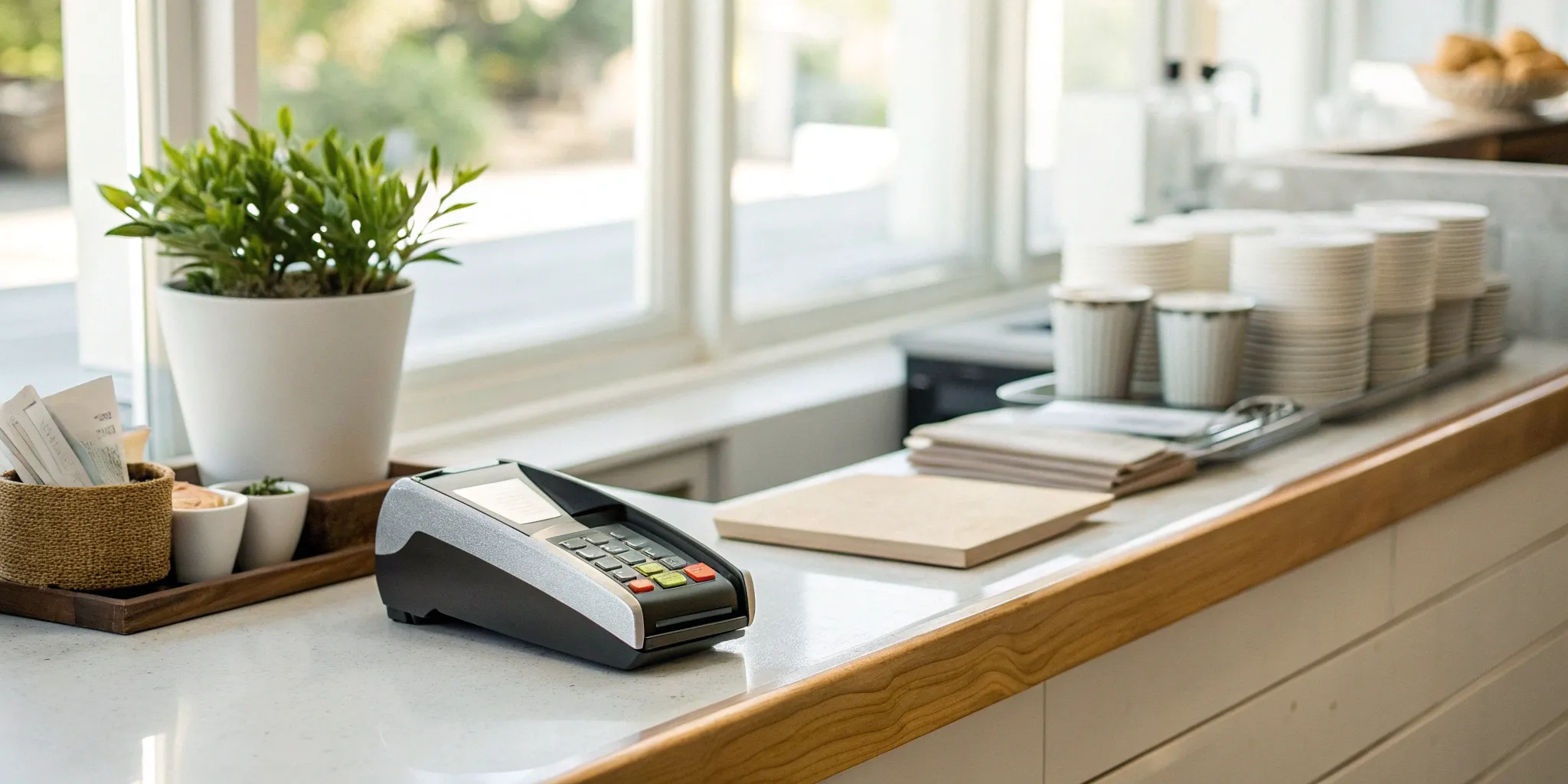
For businesses with a dedicated checkout counter, the countertop terminal is a classic for a reason. These are the sturdy, reliable machines you see in most retail shops, salons, and restaurants. Ranging from $150 to $500, they offer a straightforward way to process payments securely. Most models come equipped with a built-in receipt printer, a PIN pad for debit transactions, and the ability to accept chip cards and contactless payments like Apple Pay. They are designed to handle a steady volume of transactions day in and day out, making them a workhorse for any brick-and-mortar location. You can find a great variety of these credit card machines and terminals to fit your specific needs.
Smart Terminals: $350–$800
Think of a smart terminal as the perfect blend of a traditional terminal and a modern tablet. Priced between $350 and $800, these devices offer a sleek, user-friendly experience with a touchscreen interface. They often run on software that allows you to do more than just take payments—you can manage inventory, track sales data, and even run customer loyalty apps right from the device. Smart terminals can be handheld or sit on your counter, offering great flexibility. They’re an excellent choice for businesses like cafes, quick-service restaurants, and modern boutiques that want powerful features without investing in a full, complex POS system. They give your checkout process a professional, tech-savvy feel.
Full POS Systems: $800–$1,900+
When you need a central command center for your entire business, a full Point of Sale (POS) system is the answer. With prices starting around $800 and going well over $1,900, this is the most significant investment, but it delivers the most functionality. A full POS system typically includes a touchscreen monitor, cash drawer, barcode scanner, and receipt printer, all powered by robust software. It goes far beyond payments to help you manage inventory, track employee hours, build customer profiles, and generate detailed sales reports. This solution is ideal for growing businesses, busy restaurants, and multi-location retailers that need a comprehensive tool to streamline operations and make data-driven decisions.
Which Features Impact Price the Most?
When you start shopping for a credit card machine, you’ll quickly see that prices can range from under $50 to over $1,000. What gives? The price tag is almost always a reflection of the machine’s capabilities. A simple device that just swipes cards is going to cost a lot less than a smart terminal that tracks inventory, manages staff, and runs sales reports. Think of it like buying a car—the base model gets you from A to B, but features like a sunroof, leather seats, and a high-tech sound system will add to the final cost.
The key is to figure out which features are non-negotiable for your business and which are just nice-to-haves. Paying for bells and whistles you’ll never use is a quick way to overspend. On the other hand, skimping on a feature you desperately need—like wireless connectivity for your food truck—can hurt your operations down the line. Let’s break down the main features that influence the price so you can find that sweet spot between functionality and affordability.
Chip and Contactless Payments
At this point, the ability to accept chip cards (EMV) and contactless payments (NFC) is a must-have. This isn’t a premium feature anymore; it’s the standard for secure transactions. Customers expect to be able to dip their chip card or tap their phone to pay, and not offering these options can make your business seem outdated and less secure.
Virtually all modern terminals come equipped with this technology, so it’s baked into the base price of any machine worth considering. While it doesn’t necessarily add a huge premium, it’s what separates a legitimate, modern device from an old, risky one. Ensuring your machine has EMV and NFC capabilities is the first step in protecting your business and your customers from fraud.
Wireless vs. Wired Connectivity
How your terminal connects to the internet plays a big role in its price. A traditional wired machine that plugs directly into your internet router or phone line is typically the most affordable option. It’s a reliable choice for businesses with a fixed checkout counter, like a retail shop or a salon front desk.
If you need more flexibility, you’ll want a wireless terminal. These devices connect via Wi-Fi or a cellular network, allowing you to take payments anywhere in your store, at a customer’s table, or on the go. This freedom comes at a higher cost. The hardware is more complex, and cellular-enabled devices may even require a data plan. For mobile businesses, restaurants, or anyone who needs to break free from the counter, the extra investment in wireless technology is well worth it.
Built-in Printers and Screens
The physical design of a terminal also affects its price. A basic machine with a small monochrome screen and a physical keypad will be on the lower end of the price spectrum. As you move up to models with large, full-color touchscreens, the cost naturally increases. A responsive touchscreen not only looks more modern but can also make the checkout process faster and more intuitive for you and your staff.
Similarly, a built-in receipt printer adds convenience and cost. All-in-one units are sleek and save counter space, but they are more expensive than terminals that require a separate, external printer. For many businesses, the seamless experience is worth the price. However, if you primarily send digital receipts via email or text, you can save money by opting for a machine without an integrated printer.
Software and App Integrations
Modern credit card machines are more like computers than simple payment devices. The software they run is a huge factor in their price. A basic terminal might only handle transactions and simple daily reports. In contrast, a smart terminal or a full Point of Sale (POS) system runs on sophisticated software that can manage your entire business.
These advanced systems can handle everything from inventory tracking and employee time clocks to customer relationship management and detailed sales analytics. Many also offer app markets, allowing you to add third-party integrations for things like accounting software or marketing platforms. This powerful POS software functionality is what drives the price of high-end systems, which often come with a monthly software fee in addition to the upfront hardware cost.
What Are the Ongoing Costs to Budget For?
Buying a credit card machine is just the first step. The real cost of accepting payments comes from the ongoing fees you’ll pay every month. Understanding these charges is the key to protecting your profit margins and avoiding surprises on your statement. Think of the hardware as the ticket to the game; the processing and service fees are what you pay to actually play.
These costs can vary significantly between providers, so it’s crucial to get a clear picture of what you’ll be charged before signing any agreement. Let’s break down the three main types of ongoing costs you need to budget for.
Transaction and Processing Fees
This is where payment processors make most of their money, and it’s the most complex part of your bill. Every time a customer pays with a card, you’re charged a fee. This is usually a percentage of the sale amount plus a small, flat fee per transaction. The exact rate depends on your provider’s pricing model and the type of card used.
There are several different payment processing pricing models, from simple flat-rate plans to more complex interchange-plus structures. While flat-rate is predictable, interchange-plus can often be more transparent and cost-effective for businesses with steady sales volume. The key is to find a provider who clearly explains their fee structure so you know exactly what you’re paying for each swipe, dip, or tap.
Monthly Service and Equipment Charges
Beyond the per-transaction fees, most providers charge a fixed monthly fee for their service. This can cover things like statement preparation, customer support, and access to their payment network. Some companies also roll equipment rental costs into this monthly charge. This is where you need to be careful with those “free” terminal offers.
Often, a free machine is subsidized by higher monthly service fees or inflated processing rates. A provider might also lock you into a long-term contract you can’t easily leave. It’s always smarter to compare merchant services by looking at the total monthly cost—including fees and equipment—rather than just the upfront price of the hardware. A slightly more expensive machine could save you hundreds in the long run if it comes with lower monthly fees.
Maintenance and Support Plans
When your payment system goes down, you’re not just inconvenienced—you’re losing sales. That’s why reliable customer support is so important. Some providers include standard support in their monthly fee, while others may charge extra for premium or 24/7 assistance. You might also see charges for things like PCI compliance scans or software updates.
Before you commit, read your contract carefully. A good merchant processing agreement will clearly outline what’s included. Pay close attention to any language about long-term contracts, early termination fees, and the process for getting help when you need it. You want a partner who is there to support you, not one who adds extra fees when you’re in a tight spot.
Buy or Lease: Which Is Right for You?
One of the biggest decisions you’ll make when choosing a credit card machine is whether to buy it outright or lease it. The low monthly payments of a lease can seem tempting, especially when you’re trying to manage cash flow. However, it’s crucial to look at the bigger picture. Leasing often locks you into a long-term contract that’s difficult and expensive to break, and the total cost can end up being much higher than the machine’s actual value.
Buying, on the other hand, means a larger upfront expense but gives you full ownership of your equipment. You have the freedom to switch payment processors without worrying about a binding lease agreement. While every business has unique financial circumstances, understanding the fundamental differences between these two options will help you make a choice that supports your long-term growth instead of holding you back. Let’s break down the key factors to consider.
Upfront Cost vs. Monthly Payments
The most obvious difference between buying and leasing is how you pay. Buying a terminal requires you to pay the full price upfront, which can range from under a hundred to several thousand dollars. Leasing spreads that cost out into smaller, more manageable monthly payments. Some providers even offer “free” hardware to get you signed up, but this is where you need to be careful. A free machine is rarely ever free—the cost is usually hidden in higher transaction fees or other monthly charges. This can significantly inflate your overall expenses without you even realizing it. Always ask for a full breakdown of costs before committing.
Comparing the Total Cost Over Time
When you look beyond the first payment, the math almost always favors buying. A typical lease agreement lasts for several years, and by the time it’s over, you will have paid two or three times the machine’s retail price. Think of it this way: leasing a $500 terminal for $40 a month over four years will cost you $1,920 in total—and you still won’t own the equipment at the end. These contracts are also notoriously rigid and can be nearly impossible to cancel without paying a hefty penalty. This lack of flexibility can be a major problem if your business needs change or if you find a better processing rate elsewhere.
Why Buying Is Often the Smarter Long-Term Choice
For the vast majority of small businesses, buying your equipment is the most cost-effective and flexible option. When you own your terminal, you’re not tied to any single processor. You have the freedom to shop around for the best rates and switch providers whenever you want. While the initial investment might feel steep, it saves you a significant amount of money in the long run and protects you from predatory lease agreements. Many experts agree that it’s better to buy your machines, even if it means taking out a small loan, than to get stuck in a costly lease that drains your profits month after month.
What Hidden Costs Should You Watch Out For?
The price tag on a credit card machine is just the beginning of the story. The payment processing industry is known for its complex fee structures, and it’s easy to get caught by surprise charges if you don’t know what to look for. Think of it like buying a car—the sticker price is one thing, but taxes, dealer fees, and other add-ons can quickly inflate the final cost. The same principle applies here. A low upfront cost for hardware can mask a variety of ongoing fees that eat into your profits month after month.
To protect your bottom line, you need to look beyond the advertised price and dig into the fine print of your merchant agreement. Many providers bundle costs in ways that make it difficult to see what you’re truly paying for, often burying important details in pages of legal jargon. This isn’t just about being careful; it’s about being strategic. Being proactive and asking the right questions upfront can save you from headaches and hundreds, if not thousands, of dollars down the road. Let’s break down the most common hidden costs so you can spot them before you sign on the dotted line and choose a partner who values transparency.
Setup and Activation Fees
Right out of the gate, some providers will charge you just to get started. These are often called setup, application, or activation fees. They’re one-time charges for creating your merchant account and programming your new equipment. While not every company has them, they are common enough that you should always ask about them. Don’t let a low terminal price distract you from asking, “Are there any one-time fees to open my account or activate my machine?” A transparent provider will give you a clear answer. These costs can range from a small administrative fee to several hundred dollars, so getting a straight answer is essential for an accurate breakdown of merchant fees.
Early Termination Penalties
This is one of the biggest “gotchas” in the industry. Many merchant service providers lock you into long-term contracts—often for three to five years. If your business needs change or you find a better deal elsewhere and want to switch, you could be hit with a massive early termination fee (ETF). This penalty can cost you hundreds of dollars, effectively trapping you in a contract that no longer serves you. Always read your agreement carefully to understand the contract length and the consequences of leaving early. The best approach is to look for providers who offer month-to-month service, giving you the flexibility to make the best choice for your business without fear of penalties.
Equipment Upgrade Charges
Technology moves fast, and the credit card terminal you buy today might need an update in a few years to keep up with new payment methods or security standards. This is where hidden equipment costs can appear. If you’re leasing a machine, your contract might require you to pay for mandatory upgrades. Even if you own your terminal, you need to understand your provider’s policy on replacing outdated or broken hardware. Will you have to buy a new machine at full price? Is there a trade-in program? Asking about the equipment’s lifecycle and future upgrade costs ensures you won’t face an unexpected bill just to keep accepting payments securely.
The Truth About “Free” Machine Offers
If an offer for a “free” credit card machine sounds too good to be true, it probably is. This is a common marketing tactic used to lure in new merchants, but the terminal is rarely ever truly free. Providers recoup the cost of the hardware through other means, such as locking you into a long-term contract with high processing rates or charging inflated monthly service fees. Think of it like a “free” phone from a mobile carrier—you end up paying for it over time through a pricey, multi-year plan. Always do the math. A “free” terminal could end up costing you far more over the life of the contract than simply buying the right hardware upfront.
Finding the Best Value Credit Card Machine
Finding the “best” credit card machine isn’t about chasing the lowest sticker price. True value comes from finding the perfect intersection of hardware costs, processing fees, features, and support that aligns with your business’s unique needs. A cheap machine with high transaction fees can cost you more in the long run, while an expensive, feature-packed system might be overkill if you only process a few sales a day. The goal is to find a solution that helps you operate efficiently and grow without draining your budget.
Credit card machines are essential tools for modern businesses, allowing you to accept payments from a wider customer base and streamline your sales process. Whether you need a simple terminal for your countertop or a mobile reader for on-the-go transactions, it’s important to look at the complete picture. Think about the upfront hardware cost, any monthly software or service fees, and the processing rates you’ll pay on every sale. By weighing these factors, you can identify a machine that offers the best return on your investment and supports your business for years to come.
Exploring MBNCard’s Competitive Solutions
At MBNCard, we believe finding the right payment solution shouldn’t be complicated or costly. We focus on providing value through transparent pricing and personalized guidance. Instead of pushing one specific machine, we work with you to understand your business and recommend hardware that fits your workflow and budget. Our goal is to equip you with a reliable terminal that works seamlessly with cost-saving programs like dual pricing, which can significantly reduce or even eliminate your processing fees. We help you get the right equipment without locking you into confusing contracts or expensive leases, ensuring you get the best long-term value.
Square Options for Portability
For businesses that operate outside a traditional storefront—like food trucks, artists at craft fairs, or mobile service providers—portability is key. The Square Terminal is a popular all-in-one device designed for this exact purpose. It allows you to accept all major payment types and print receipts from a single, compact machine. With a current price of around $209 (and payment plan options available), it’s an accessible choice for merchants who need flexibility. Its simple interface and reliable performance make it a go-to for business owners who need to process payments anywhere their work takes them.
Clover Systems for Growing Businesses
As your business grows, your needs become more complex. You might need more than just a simple payment processor; you might need a central hub to manage sales, inventory, and customer data. This is where systems like the Clover Mini shine. Priced at $799, it’s a bigger investment, but it packs powerful point-of-sale (POS) features into a sleek, countertop-friendly device. It’s ideal for bustling retail stores or cafes that need robust functionality without the bulk of a full POS system. With Clover, you’re not just getting a card reader—you’re getting a tool to help manage and scale your operations.
Budget-Friendly Choices for Startups
When you’re just starting, every dollar counts. The good news is you don’t need to spend a fortune to start accepting credit cards. There are plenty of budget-friendly choices designed for startups and small businesses. Simple mobile card readers that connect to your smartphone or tablet can cost as little as $10 to $130. Basic countertop terminals that handle swipe, chip, and keyed-in payments typically run for a couple of hundred dollars. These no-frills options provide all the essential functionality you need to get up and running without a significant upfront investment, making them a smart choice for new entrepreneurs.
Common Myths About Credit Card Machine Costs
When you’re trying to find the right credit card machine, it’s easy to get tripped up by confusing terms and tempting offers. The truth is, the price you see for the hardware is rarely the full story. Many providers hide costs in the fine print, turning a great deal into a financial headache. Let’s clear the air and tackle some of the most common myths about credit card machine costs so you can make a decision that truly benefits your business.
Understanding these pitfalls is the first step toward finding a transparent payment partner. By knowing what to look for, you can avoid long-term contracts and hidden fees that eat into your profits. We’ll break down what’s really behind those “too good to be true” deals and why the cheapest option upfront isn’t always the most affordable in the long run.
The “Free” Hardware Myth
We’ve all seen them: bold promises of a “free” credit card terminal when you sign up for a merchant account. While getting essential hardware at no cost sounds amazing, these offers almost always have a catch. Processors use free terminals to lock you into lengthy, iron-clad contracts with high processing rates or hidden monthly fees. Over the course of that contract, you could end up paying far more than the machine was ever worth. It’s wise to be cautious with offers for “free” credit card terminals, as they often mask the true cost of the service. Always ask what’s required in return for the “free” equipment.
Leasing Traps That Drain Your Budget
Leasing a credit card machine might seem like a low-cost way to get started, but it’s one of the most expensive traps a business owner can fall into. Lease agreements are notoriously difficult to break and can last for years, long after the technology has become outdated. By the time the lease is up, you will have paid several times the actual value of the terminal—and you still won’t own it. Most experts agree that you should avoid leasing credit card terminals whenever possible. Buying your equipment outright gives you more freedom, control, and a much lower total cost of ownership.
Decoding Confusing Processing Fees
The cost of a credit card machine isn’t just the price of the device itself. The real costs are in the ongoing processing fees you’ll pay on every single transaction. Many business owners focus on the hardware price and overlook the fee structure, which is where providers make their money. There are many other fees involved, from transaction fees (a percentage of the sale plus a flat fee) to monthly statement fees, PCI compliance fees, and more. To understand the true cost, you have to look at the complete picture—not just the shiny new terminal on your counter.
How to Calculate Your True Processing Cost
The price tag on a credit card machine is just the start of the story. To truly understand what you’ll pay each month, you need to look at the processing fees that come with every transaction. These costs can feel complex, but breaking them down is the key to finding a solution that actually fits your budget. Let’s walk through how to figure out your real cost so you can make a confident choice for your business.
Flat-Rate vs. Interchange-Plus: What’s the Difference?
First, it’s helpful to know the two most common pricing models you’ll encounter. Flat-rate pricing is the simplest to understand. With this model, you’re charged a fixed percentage and a small fee for every transaction, no matter what kind of card your customer uses. It’s predictable, which is great for budgeting, but it can sometimes be more expensive if your sales grow.
Interchange-plus pricing is more transparent. It separates the non-negotiable fees charged by card networks (like Visa and Mastercard) from the processor’s markup. This model passes the wholesale interchange fees directly to you, plus a small, fixed markup for the processor. While the rates can vary slightly between card types, this model is often more cost-effective for businesses with steady sales volume.
How Your Sales Volume Affects Rates
How much you sell each month plays a big role in the rates you’ll be offered. As a general rule, higher sales volumes can lead to lower rates. Processors are often willing to offer better terms to businesses that handle more transactions because it means more business for them, too.
When you’re shopping for a processor, come prepared with your monthly sales data and average transaction size. This information gives you leverage to ask for a better rate. Don’t be afraid to negotiate your processing fees; a good partner will work with you to find a rate that makes sense for the volume you’re processing. If your business is seasonal, be sure to mention that as well.
Comparing Your Total Monthly Expenses
To get a clear picture of your costs, you have to look beyond the per-transaction rate. When you’re evaluating your options, consider all the regular fees associated with your account. These can include monthly statement fees, PCI compliance fees, batch fees, and charges for any additional software you might need. These costs can add up and significantly impact your bottom line.
The best way to avoid surprises is to ask for a full, itemized quote that lists every potential charge. Better yet, ask for a statement analysis. At MBNCard, we can review your current processing statement and show you exactly where you could be saving money. This helps you understand all the fees and compare different providers on an apples-to-apples basis, ensuring you know your true processing cost from day one.
How to Choose the Right Machine for Your Budget
Finding the right credit card machine isn’t just about picking the cheapest option—it’s about finding the best value for your specific business. The perfect terminal for a bustling coffee shop will be different from what a freelance photographer needs. By thinking through your daily operations, sales volume, and long-term goals, you can land on a solution that saves you money and makes your life easier. Let’s break down how to make the right call without getting overwhelmed.
Match Features to Your Business Needs
Before you even look at prices, take a moment to map out what you actually need a machine to do. Think about your daily workflow. Do you run a retail store where you need a sturdy countertop terminal with a built-in printer? Or are you a mobile service provider who needs a portable reader that connects to your phone? Make a list of must-have features versus nice-to-have ones.
It’s essential to choose a machine that fits your current business needs and can grow with you. At a minimum, ensure any terminal you consider can accept both EMV chip cards and NFC contactless payments (like Apple Pay and Google Pay). These methods are not only what customers expect, but they also provide an extra layer of security for every transaction.
Evaluate Your Transaction Volume
Your sales volume plays a huge role in determining the right machine and processing plan. If you process a high number of sales each day, investing in a faster, more robust terminal or a full POS system can prevent long lines and keep customers happy. For businesses with lower or less frequent transaction volumes, a simple mobile or countertop reader is often more than enough to get the job done efficiently.
Remember that your transaction volume also directly impacts your ongoing costs. Payment processors charge fees for every transaction, so understanding your sales patterns will help you compare processing rates and find a plan that makes financial sense for your business, ensuring you aren’t overpaying for features you don’t use.
Price vs. Functionality: Making the Final Call
When you’re ready to decide, look beyond the upfront hardware cost. A “free” terminal might seem like a great deal, but these offers often lock you into long-term contracts with high processing fees or hidden monthly charges. The total cost of ownership is what really matters. A slightly more expensive machine from a transparent processor with fair terms will almost always save you money in the long run.
Focus on finding a payment partner who offers reasonable prices, clear contract terms, and reliable customer support. The hardware is important, but the service behind it is what keeps your business running smoothly. Don’t let a flashy terminal distract you from what truly counts: a payment processing solution that supports your business’s growth and financial health.
Related Articles
- 5 Best Credit Card Terminals for Small Business
- 6 Best Small Business Credit Card Machines
- 5 Point of Sale Examples From Top Industries
Frequently Asked Questions
Is it really better to buy a credit card machine instead of leasing one? Yes, for almost every small business, buying your equipment is the smarter financial move. Leasing might seem appealing because of the low monthly payments, but those payments add up quickly. Over a typical multi-year lease, you’ll end up paying far more than the machine is actually worth, and you won’t even own it at the end. Buying gives you freedom, saves you money in the long run, and prevents you from getting locked into a rigid contract you can’t escape.
What’s the catch with “free” credit card machine offers? A “free” machine is almost never truly free. This is a common tactic used to get you to sign a long-term contract. The provider makes up for the cost of the hardware by charging you higher processing rates or tacking on extra monthly fees. Over the life of your contract, that “free” device could cost you hundreds or even thousands more than if you had just purchased the equipment upfront from a transparent provider.
Besides the machine itself, what other fees will I have to pay every month? The cost of the hardware is just the beginning. Every month, you can expect to pay transaction fees, which are a percentage of each sale. You may also have a monthly account fee, charges for PCI compliance to keep your system secure, and sometimes small fees for batching your daily transactions. It’s essential to ask for a full breakdown of all potential charges so you can accurately calculate your total monthly cost before you commit.
Do I actually need all the fancy features like a touchscreen or app integrations? It completely depends on your business. A simple, reliable terminal is perfect for a business that just needs to process payments at a counter. However, if you run a busy cafe or retail shop, a smart terminal with a touchscreen and apps for inventory or staff management can be a powerful tool that streamlines your entire operation. The key is to be realistic about what you’ll actually use so you don’t overpay for features you don’t need.
How can I tell if I’m getting a good deal on processing rates? A good deal is about more than just a low percentage rate. The most transparent pricing model is often “interchange-plus,” which separates the wholesale cost from the processor’s markup. This lets you see exactly what you’re paying for. The best way to know for sure is to get a statement analysis from a potential new provider. They can review your current bill and show you precisely where you can save money, giving you a clear, apples-to-apples comparison.