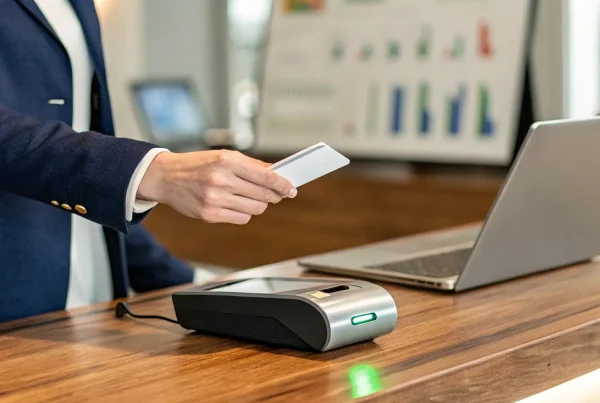
As a business owner, your goal is to make it as easy as possible for customers to buy from you. In a world where people rarely carry cash, that means accepting credit cards, debit cards, and digital wallets. A merchant account is what makes this possible, acting as the financial bridge for every card transaction. It’s more than just a utility; it’s a tool for growth that improves cash flow, builds customer trust, and increases sales. Choosing the right merchant account for small business can feel like a huge decision, but it doesn’t have to be. Let’s explore how these accounts function and what you need to know to get started.
Key Takeaways
- A merchant account is your key to modern sales: It’s a special business account that allows you to accept credit cards and digital payments, which helps you get paid faster, improve cash flow, and make more sales.
- Compare providers to find the best fit: You are not required to use your bank for payment processing. Look for a dedicated provider and compare pricing models, like transparent interchange-plus, to find a stable and affordable long-term solution.
- Choose a partner, not just a processor: Look beyond rates and evaluate the whole package. The right provider offers clear contracts, responsive customer support, and robust security to protect your business and build customer trust.
What Is a Merchant Account and How Does It Work?
If you want to accept credit cards, debit cards, or digital wallet payments like Apple Pay, you’ll need a merchant account. Think of it as a special type of business bank account that acts as a bridge between your customer’s bank and your own. It’s designed specifically to handle the entire electronic payment process, from the moment a customer taps their card to the moment the money lands in your business checking account.
Without a merchant account, you’re limited to accepting cash or checks, which can turn away customers who prefer the convenience of paying with a card. This account is the engine that powers modern transactions, ensuring payments are authorized, processed securely, and transferred to you correctly. It’s a fundamental tool for any business looking to grow. Let’s walk through exactly how it functions and clear up some common confusion around how these accounts operate.
Your Account’s Role in Payment Processing
Your merchant account isn’t the final destination for your money; it’s more like a temporary holding area. When a customer makes a purchase, the funds are first sent to your merchant account for verification and processing. This step is crucial for security and accuracy.
The money typically stays in this account for one to two business days. During this time, the payment networks and banks are all communicating to confirm the transaction is legitimate and that the funds are available. Once everything checks out, the money is automatically transferred from your merchant account into your regular business checking account. This brief holding period ensures every transaction is settled properly before you receive the final deposit.
Follow the Money: How Funds Move Through Your Account
The journey a payment takes from your customer to your bank account happens in just a few seconds, but several steps are involved. First, your customer pays by tapping, swiping, or inserting their card. Your point-of-sale system or payment terminal securely sends the transaction details to your merchant account provider.
From there, the request is routed to the customer’s bank to verify they have sufficient funds or credit. The bank then sends back an approval or decline message. If approved, the funds are moved from the customer’s account and deposited into your merchant account. After the short settlement period we talked about, the batch of approved funds is transferred to your business checking account.
Common Merchant Account Myths, Busted
Many business owners mistakenly believe they have to get their merchant account from the same bank where they have their checking account. While convenient, banks often charge surprisingly high fees for payment processing. You are not restricted to your local bank and can almost always find better rates and service with a dedicated merchant services provider.
Another common myth is that all providers are the same. This couldn’t be further from the truth. Because there are so many ways to structure pricing, the fees can vary widely from one company to the next. Taking the time to compare providers and understand their pricing models is one of the smartest financial decisions you can make for your business.
Why Your Business Needs a Merchant Account
Think of a merchant account as more than just a way to process payments. It’s a fundamental tool that helps your business grow, operate smoothly, and build trust with customers. In a world where convenience is king, simply being able to accept a customer’s preferred payment method can be the difference between making a sale and losing one. If you’re still relying on cash and checks, you might be missing out on significant revenue and creating unnecessary hurdles for your customers. A merchant account closes that gap, allowing you to welcome every customer, no matter how they choose to pay.
Beyond that, a solid merchant account brings a host of benefits that can strengthen your business from the inside out. It’s about creating a professional and secure experience that gives buyers confidence. When customers see that you accept major credit cards and use secure technology, it signals that you’re a legitimate and trustworthy business. This account also becomes your operational backbone, improving your cash flow with faster deposits and simplifying your financial management with detailed reporting. It’s an investment that pays for itself by increasing sales, protecting your assets, and giving you the data you need to make smarter decisions. Let’s look at the key reasons why getting a merchant account is one of the smartest moves you can make.
Accept More Payment Types and Increase Sales
If you’re only accepting cash, you’re likely leaving money on the table. Today’s customers expect the flexibility to pay how they want, whether that’s with a credit card, a debit card, or a digital wallet like Apple Pay. A merchant account is your ticket to accepting all these modern payment methods. By making the payment process seamless and convenient, you remove friction from the buying experience. This not only keeps your current customers happy but also attracts new ones who might have walked away otherwise. More payment options almost always lead to more sales and a healthier bottom line.
Get Paid Faster to Improve Cash Flow
Waiting for checks to clear or for invoices to be paid can put a serious strain on your business operations. A merchant account dramatically speeds up your funding process. Instead of waiting weeks, credit and debit card payments are processed, settled, and deposited directly into your business bank account, typically within one to three business days. This quick access to your funds is a game-changer for cash flow management. You can pay suppliers on time, purchase new inventory, and cover payroll without the stress of unpredictable income, giving you the financial stability to run your business confidently.
Protect Your Business and Customers from Fraud
Handling payments involves sensitive financial information, and security should be a top priority. Reputable merchant service providers offer secure processing that protects both you and your customers from fraud. They use advanced tools like encryption and tokenization to safeguard card data from the moment a transaction begins. They also help you stay compliant with industry security standards, like PCI compliance, which is a set of rules designed to protect cardholder data. This robust security not only minimizes your risk of costly data breaches and chargebacks but also builds essential trust with your customers.
Simplify Your Bookkeeping with Better Reporting
A merchant account does more than just move money; it provides a wealth of data that can help you make smarter decisions. Most providers offer a dashboard with detailed reports on your sales activity. You can easily track daily transactions, view sales trends over time, identify your best-selling products, and understand customer spending habits. This information makes bookkeeping and reconciliation much simpler, saving you hours of manual work. By tapping into your sales data, you gain clear insights into your business’s performance, allowing you to spot opportunities and plan for the future more effectively.
What Are My Merchant Account Options?
Once you start looking for a merchant account, you’ll quickly realize they aren’t all created equal. The right account for a brand-new coffee shop will be very different from the one needed by an established online retailer. Finding the best fit means looking at a few key factors that will directly impact your bottom line and day-to-day operations. Think of it like choosing a business partner; you want someone who understands your needs and is set up to help you succeed.
The main differences between merchant accounts come down to three things: how you’re charged for transactions, the type of account you’re given, and whether the provider specializes in your industry. Understanding these options is the first step toward finding a solution that saves you money and supports your growth. A great provider will walk you through these choices, but going in with a little knowledge helps you ask the right questions and spot the best deal for your specific business. Let’s break down what you need to know.
Understanding Pricing Models: Flat-Rate vs. Interchange-Plus
The pricing model determines how you’ll pay for every credit and debit card transaction. The two most common models are flat-rate and interchange-plus. Flat-rate pricing is the simplest: you pay one consistent rate, like 2.9% + 30¢, for every transaction, regardless of the card type. This predictability is great for new businesses or those with lower sales volumes who want to easily forecast their expenses.
Interchange-plus pricing is more transparent. It separates the non-negotiable interchange fees charged by card networks (like Visa and Mastercard) from the processor’s markup. You pay the direct cost plus a small, fixed fee. This model is often more affordable for businesses with steady growth and a mix of transaction types, as you can see exactly what you’re paying the provider.
Choosing an Account Type: Dedicated vs. Aggregate
Next, you’ll need to decide between a dedicated or an aggregate account. An aggregate account, used by providers like PayPal and Square, groups your business with thousands of others under one master account. It’s faster to set up, but it comes with risks. Your account could be frozen or shut down with little warning if their system flags your activity.
A better long-term solution for a serious business is a dedicated merchant account. This is an account created just for your business, giving you more stability, control, and often better rates. You get your own merchant ID, which helps build a processing history and ensures your funds are never co-mingled with other businesses, protecting your cash flow.
Finding an Account That Fits Your Industry
Not all businesses carry the same level of risk in the eyes of a payment processor. A local bakery is considered low-risk, while an online travel agency is seen as high-risk due to the higher likelihood of chargebacks. This is why the application process and the rates you’re offered can vary so much.
It’s important to find a merchant service provider who has experience working with businesses in your specific industry. They’ll understand your unique challenges, be able to offer more competitive rates, and provide the right tools to help you operate smoothly. A provider who specializes in your field is better equipped to be a true partner in your growth.
How to Choose the Best Merchant Service Provider
Finding the right merchant service provider is one of the most important decisions you’ll make for your business. This isn’t just about finding the lowest rate; it’s about finding a partner who will support your growth, protect your transactions, and make your life easier. With so many options out there, it’s easy to feel overwhelmed. The key is to know what to look for. Think of this as your checklist for vetting potential providers to find one that truly fits your business needs, starting with the most important factor: the price.
Look for Transparent Pricing and Competitive Rates
Let’s be honest: no one likes surprise fees. The best merchant service providers are upfront and honest about their pricing. A good provider will disclose all rates and fees clearly and show you exactly where they are in your contract. Be wary of any company that is vague about its costs. You should look for a partner who offers transparent pricing models, like interchange-plus or a simple flat rate, so you can easily understand your merchant statement and predict your monthly costs. Your goal is to find competitive rates without sacrificing clarity.
Check for Essential Tools and Integrations
In today’s market, payment processing is about more than just swiping a card. Your merchant service provider should offer the tools and technology you need to run your business efficiently. This includes modern point-of-sale (POS) systems that can manage inventory and track sales, as well as seamless e-commerce integrations for your online store. Make sure any provider you consider can support the way you do business, whether that’s in-person, online, or on the go. The right tech stack simplifies your operations and helps you create a better customer experience.
Prioritize Responsive, Helpful Support
When your payment system goes down, you can’t afford to wait on hold for hours. A provider’s customer support can make or break your experience. Look for a company that offers responsive, helpful, and accessible support. Do they have a dedicated team you can call directly? Are they available when you need them most, not just during standard business hours? You’re not just another number; you’re a business owner. You deserve a support team that treats your business with the urgency and respect it deserves.
Understand Your Contract Terms and Flexibility
Getting stuck in a long-term contract with high cancellation fees can stifle your business’s growth. Before you sign anything, read the fine print carefully. Pay close attention to the contract length, any early termination fees, and equipment lease agreements. The best providers are confident enough in their service to offer flexible, month-to-month agreements. While some providers might be willing to negotiate a contract buyout, it’s far better to choose a partner who gives you the freedom to make the best choice for your business from the start.
Confirm Top-Notch Security and Fraud Protection
Protecting your customers’ payment data is non-negotiable. A reputable merchant service provider will make security a top priority. Ensure they are PCI compliant and offer advanced fraud protection tools, such as encryption and tokenization, to safeguard every transaction. A good partner helps you stay on top of security best practices, protecting your business from costly data breaches and chargebacks. This isn’t just about compliance; it’s about building trust with your customers and protecting your hard-earned reputation.
How to Set Up Your Merchant Account: A Step-by-Step Guide
Getting your merchant account set up is more straightforward than you might think. It’s all about being prepared and knowing what to expect. Think of it as a simple, four-step process: gathering your information, submitting your application, working through the approval, and finally, starting to accept payments. When you partner with a provider who values transparency, each step becomes clearer and you can get funded faster. Let’s walk through exactly what you need to do to get your account up and running.
Gather the Right Business Documents
Before you start filling out applications, take a few minutes to get your paperwork in order. Having everything ready will make the process much smoother. Most providers will ask for the same core information to verify your business and understand your sales activity.
You’ll typically need:
- Your business’s legal name and DBA (“doing business as”) name
- Your Employer Identification Number (EIN) or Social Security number if you’re a sole proprietor
- Your business bank account and routing numbers for deposits
- Your estimated monthly processing volume (a good guess is fine if you’re new)
- A voided check or bank letter
Keeping these details handy means you can complete your application quickly and avoid unnecessary delays.
The Application and Underwriting Process, Explained
Once you submit your application, it goes into underwriting. This is just the provider’s process for reviewing your information and assessing risk. The underwriter’s job is to confirm that your business is legitimate and stable. They’ll verify your identity, review your business history, and check your credit. This step is crucial for protecting both you and the processor from fraud.
The underwriting process also ensures that when a customer makes a purchase, the transaction is secure. Your provider sends the payment details to the customer’s bank, which then approves or declines the charge based on the available funds. A thorough underwriting process is the sign of a reliable partner who is invested in your long-term success.
Overcome Common Approval Hurdles
Sometimes, business owners run into a few bumps on the road to approval. One common issue is being classified as a “high-risk” merchant. Payment processors look at several factors to determine risk, including your industry, average transaction size, and chargeback history. Industries like travel, subscription services, or CBD sales are often considered high-risk. If this applies to you, don’t worry. The key is to be upfront about your business model and find a provider experienced in your industry.
Another hurdle can be incomplete or inconsistent information. Make sure the business name and address on your application match your bank statements and other legal documents exactly. Taking the time to double-check these details can prevent simple mistakes from slowing you down.
Your Timeline to Start Accepting Payments
So, how long does all of this take? The good news is that it’s usually pretty fast. If you have all your information ready and your business falls into a standard-risk category, you can often get approved for a merchant account within a day or two. Some providers even offer same-day approvals for straightforward applications.
The timeline can extend if your business is considered high-risk or if the underwriter needs additional documentation to verify your details. The best way to speed things up is to be prepared. Have your documents organized, fill out the application completely, and be responsive if the provider requests more information. Before you know it, you’ll be ready to accept payments.
Related Articles
- What is Merchant Services in Banking? A Full Guide
- How to Open a Merchant Account Online: A 5-Step Guide
- Merchant Services Credit Card Processing 101
Frequently Asked Questions
What’s the difference between a merchant account and my regular business bank account? Think of your merchant account as a secure weigh station for your money. When a customer pays you, the funds first go into your merchant account for verification and processing. Once the transaction is confirmed, the money is then transferred to its final destination: your business bank account. Your bank account is for holding your funds long-term, while the merchant account is the short-term operational hub that makes electronic payments possible.
Do I really need a dedicated merchant account, or can I just use something like Square or PayPal? Services like Square and PayPal are a good starting point, but they operate on an aggregate model, meaning your business is lumped in with thousands of others. A dedicated merchant account is created just for your business. This gives you more stability, better long-term rates, and greater control over your funds. As your business grows, having a dedicated account reduces the risk of sudden freezes or closures that can happen with aggregate providers.
How long will it take to get my money after I make a sale? You can typically expect to see funds from card transactions deposited into your business bank account within one to two business days. This brief delay is called the settlement period. During this time, the payment networks and banks are all communicating behind the scenes to verify the transaction and securely move the money from your customer’s account to yours.
What if my business is new or considered “high-risk”? Can I still get an account? Yes, you absolutely can. If your business is new, providers will look at your personal credit and business plan to make a decision. If you’re in an industry considered high-risk, like travel or subscription services, the key is to find a provider who specializes in your field. They understand the unique challenges and are better equipped to get you approved with fair terms. The most important thing is to be transparent about your business model from the start.
Are all the fees really necessary? What should I look out for? While some fees, like the interchange fees charged by card networks like Visa, are non-negotiable, the markup added by the processor can vary widely. A trustworthy provider will be completely transparent about their pricing. You should look for a clear pricing model, like interchange-plus, and always ask for a full schedule of all potential fees. Be cautious of any provider who is vague about costs or tries to lock you into a long-term equipment lease.