You might wonder why you need another account just to accept credit cards. Can’t the money just go straight into your business bank account? The short answer is no, and the reason is all about security and organization. This is where the ‘merchant account meaning’ becomes clear; it’s a necessary intermediary that protects both you and your customers. This account works with payment processors and card networks to verify each transaction, check for fraud, and manage the complex settlement process. It’s a system built on trust and compliance. Instead of viewing it as a hurdle, think of it as a foundational tool that professionalizes your operations, ensures you get paid correctly, and keeps sensitive financial data safe from risk.
Key Takeaways
- A merchant account is your payment bridge: It’s the essential link that securely connects your customer’s payment to your business bank account. This setup builds customer trust, gets you paid faster, and gives your business a professional foundation for growth.
- Find the right fit for how you sell: The best account for you depends on your business model, so choose one designed for retail, e-commerce, or mobile sales. Understanding the fee structure and working with a transparent partner are the keys to keeping your costs manageable.
- Manage your account to maximize its value: Your account is a powerful tool, so use it. Regularly review your sales reports for business insights, keep your systems secure to protect customer data, and establish clear policies to reduce costly chargebacks.
What Is a Merchant Account?
Think of a merchant account as a special kind of bank account that acts as a bridge between your customer’s payment and your business’s bank account. When you accept credit or debit cards, the money doesn’t go directly into your checking account. Instead, it’s first sent to your merchant account, which is a holding area where transactions are authorized and settled.
This account is what makes it possible for you to accept card payments securely, whether a customer pays online, in your store, or on the go. It’s a fundamental piece of the payment puzzle for any business that wants to offer the convenience of card payments. Unlike your regular business bank account, which you use for payroll and expenses, a merchant account is designed specifically to handle the flow of funds from customer sales. This setup is essential for managing your revenue and ensuring you get paid efficiently from every card transaction.
Where it fits in the payment process
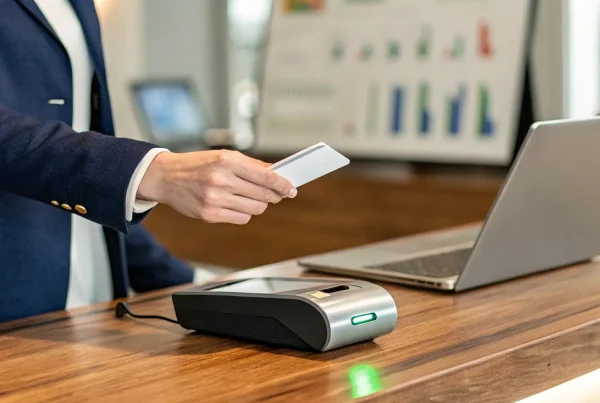
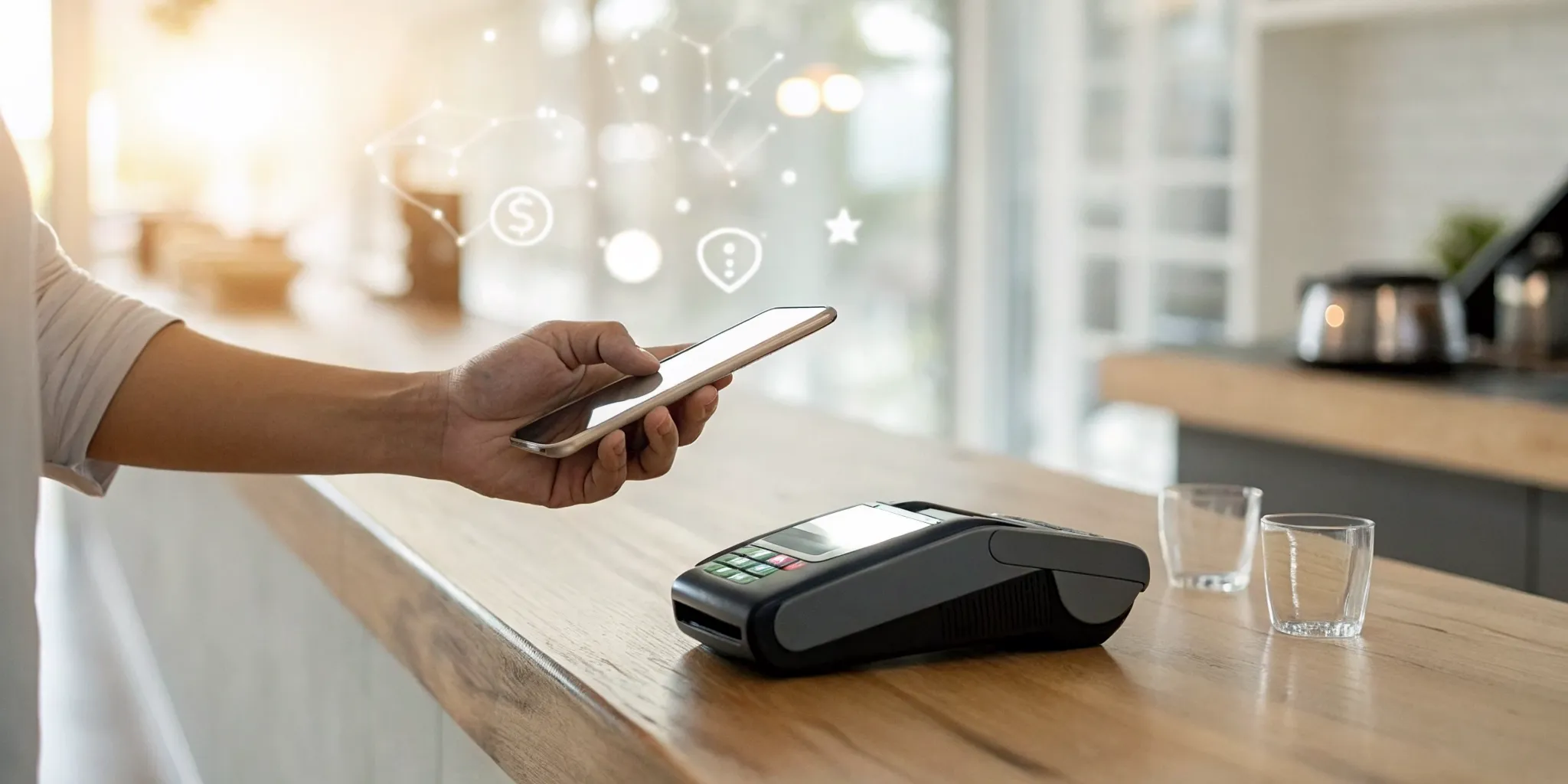
So, what actually happens when a customer taps their card at your terminal? The merchant account is at the center of a rapid, multi-step process. First, when the customer pays, your point-of-sale (POS) system sends the transaction details to your payment processor. The processor then routes the information through the card network to the customer’s bank to check for approval. The bank verifies if the customer has enough funds or credit and sends back an “approved” or “denied” message in seconds. If approved, the funds are moved from the customer’s account and held in your merchant account before being transferred to your business checking account. This entire sequence ensures that electronic transactions are both secure and fast.
Merchant accounts vs. third-party processors
You’ll often hear terms like “merchant account” and “third-party processor” used together, and it can get confusing. A traditional merchant account is established directly with a financial institution (an acquiring bank) that holds your funds. On the other hand, third-party processors, like Stripe or Square, group many small businesses under one large merchant account. This model often allows for faster setup but can sometimes come with less personalized support. Many modern merchant services providers now offer a hybrid approach, giving you the stability of a dedicated account with the streamlined technology of a processor. Understanding this difference is key to choosing the right partner for your payment needs.
How Does a Merchant Account Work?
A merchant account might sound technical, but its job is simple: getting money from your customer’s card into your business bank account. It acts as the secure go-between connecting your point-of-sale system, the major card networks, and your bank. While several steps happen behind the scenes, the entire process is designed to be fast and seamless for you and your customers. Let’s walk through what happens every time a customer pays.
From customer swipe to your bank account
It all starts when your customer is ready to pay, whether they swipe, tap, or enter card details online. Your payment terminal or checkout sends the transaction details to the customer’s bank, which instantly checks for available funds or credit. It then sends back an “approved” or “denied” message. If approved, the funds are withdrawn from the customer’s account and deposited into your merchant account. From there, the money is transferred to your business checking account during settlement. This entire payment authorization cycle happens in seconds, creating a smooth experience.
The key players: Acquiring banks and processors
Your merchant account is an agreement between your business and a special kind of bank called an acquiring bank, which handles card payments for you. However, you usually won’t work directly with this bank. Instead, you’ll partner with a merchant services provider (like us at MBNCard). We act as the liaison between you, the acquiring bank, and card networks like Visa and Mastercard. A provider simplifies everything by setting up your account, managing the technology, and giving you a single point of contact for support. This lets you focus on your business, not complex banking relationships.
The role of payment gateways in e-commerce
If you sell products online, you’ll need one more piece to the puzzle: a payment gateway. You can think of a payment gateway as the digital version of a physical credit card terminal. It’s the software that connects your website’s shopping cart to the payment processing network. The gateway’s main job is to securely capture the customer’s payment details from your website and pass them along for processing. It encrypts this sensitive information, protecting both you and your customer from fraud during online transactions. For any business with an online presence, a reliable payment gateway is essential for accepting payments safely and efficiently.
Finding the Right Type of Merchant Account
Choosing a merchant account isn’t a one-size-fits-all decision. The best account for your business depends entirely on how and where you sell your products or services. Think of it like choosing the right tool for a job; you wouldn’t use a hammer to turn a screw. Similarly, a business that sells exclusively online has very different payment processing needs than a brick-and-mortar boutique or a food truck that operates in different locations.
Understanding the main types of merchant accounts will help you find the perfect fit for your operations. This ensures you can accept payments smoothly, keep your costs in check, and provide a great experience for your customers. We’ll walk through the four primary categories: retail, e-commerce, mobile, and high-risk accounts. As you read, think about your daily sales process to see which one aligns with your business model.
Retail (in-person) accounts
If you run a business with a physical location where customers pay face-to-face, a retail merchant account is what you need. This is the classic setup for brick-and-mortar shops, restaurants, salons, and any other business that interacts with customers at a counter. A merchant account is a special type of bank account that allows your business to accept credit and debit card payments. For retail, this account is optimized for in-person transactions, connecting directly to your point-of-sale (POS) system or countertop card terminal. It’s designed for fast, secure, and reliable card-present transactions, ensuring your checkout line keeps moving and your customers can pay quickly and easily.
E-commerce accounts
For businesses that operate online, an e-commerce merchant account is your digital storefront’s cash register. This account is specifically designed to handle electronic payments securely over the internet. When a customer on your website is ready to check out, they enter their credit card information or use a digital wallet like Apple Pay or Google Pay. The e-commerce account, working behind the scenes with a payment gateway, verifies the funds and processes the transaction safely. It’s an essential component for any online store, providing the secure infrastructure needed to protect sensitive customer data, build trust, and convert browsers into buyers.
Mobile payment accounts
Does your business operate on the go? A mobile payment account is the perfect solution for you. This is ideal for food trucks, contractors, artists at craft fairs, mobile dog groomers, and any professional who meets clients outside of a traditional storefront. These accounts allow you to accept credit and debit cards anywhere using a smartphone or tablet connected to a compact card reader. Since most customers prefer to pay with cards or apps instead of carrying cash, having this capability is crucial. It gives you the flexibility to close a sale on the spot, no matter where your business takes you.
High-risk accounts
Some industries are classified as ‘high-risk’ by banks and payment processors. This label is typically applied to businesses with a higher potential for chargebacks or those in industries with more financial regulation, such as travel agencies, subscription box services, CBD sellers, or credit counseling. If your business falls into this category, you’ll need a high-risk merchant account. While these accounts often come with higher fees and stricter terms to balance the processor’s increased risk, they are absolutely attainable. The most important step is to partner with a provider that understands the nuances of high-risk processing and can secure a stable, transparent solution for your business.
Understanding Merchant Account Costs
Let’s talk about the money side of things. Merchant account costs can seem confusing at first glance, but they really boil down to a few key types of fees. Once you know what to look for, you can find a provider that fits your budget and helps your business grow without any surprise charges. Think of it less as a mystery to solve and more as a simple list to check off.
Transaction fees explained
The most common cost you’ll see is the transaction fee. This is what you pay your provider each time a customer makes a purchase. It’s usually a small percentage of the sale combined with a flat fee, for example, 2.9% plus $0.30. This fee covers the work of securely moving money from your customer’s bank to yours. The exact rate often depends on the type of card used and whether the payment is made in person or online. These fees are a fundamental part of how merchant accounts operate, as they cover the costs associated with the card networks and banks involved in every single sale.
Common monthly, setup, and chargeback fees
Beyond individual transaction fees, you might encounter a few other charges. It’s helpful to know what they are so you can ask providers about them directly.
- Monthly Fees: Some providers charge a flat monthly fee for services like account maintenance, access to sales reports, or dedicated customer support.
- Setup Fees: This is a one-time cost to get your account up and running. The good news is that many modern providers have done away with this fee.
- Chargeback Fees: If a customer disputes a charge and requests a refund from their bank, your provider may charge you a fee to manage that process.
Knowing about these common merchant account fees helps you read your monthly statements and compare different providers more effectively.
How to lower your overall processing costs
You have more control over your processing costs than you might think. While some fees are set by card networks like Visa and Mastercard, there are smart ways to keep your expenses down. Partner with a provider that offers transparent pricing and programs designed to save you money, like cash discounting. You can also reduce your transaction risk. For online sales, providing extra details like the customer’s billing address and CVV code can often lead to lower processing rates because it proves the transaction is secure. This is just one way a merchant account can be optimized. Finally, focusing on great customer service and clear return policies helps you avoid costly chargebacks.
The Real-World Benefits of a Merchant Account
Thinking about a merchant account as just another box to check is easy, but it’s so much more than a technical requirement. It’s a powerful tool that directly impacts your daily operations, customer relationships, and bottom line. Getting a dedicated merchant account is one of the most practical steps you can take to professionalize your business and set it up for sustainable growth. It’s about making things easier for your customers and for yourself.
Beyond simply letting you accept cards, the right merchant account can give you a competitive edge. It helps you build credibility, especially if you sell online, by showing customers you have a secure and legitimate payment process. It also provides you with valuable sales data that can help you make smarter business decisions, from managing inventory to planning promotions. And perhaps most importantly, it ensures you get paid quickly and reliably, which is essential for maintaining healthy cash flow. Let’s look at these real-world benefits in more detail.
Let customers pay how they want
A merchant account is a special type of bank account that allows your business to accept a wide range of electronic payments. This includes credit cards, debit cards, and popular digital wallets like Apple Pay or Google Pay. In a world where fewer people carry cash, offering these options isn’t just a convenience; it’s a necessity. When you let customers pay how they want, you remove friction from the buying process and reduce the risk of losing a sale simply because you couldn’t accept their preferred payment method. This flexibility meets modern consumer expectations and creates a smoother, more positive experience for everyone who shops with you.
Build trust and sell securely online
Accepting card payments does more than just simplify transactions; it makes your business appear more established and trustworthy. When customers see that you have a professional system for handling payments, it builds their confidence in your brand. This is especially critical for e-commerce businesses, where trust is the foundation of every sale. A dedicated merchant account signals that you take security seriously. These accounts are built to protect sensitive data through encryption and fraud monitoring tools, helping keep both your business and your customers safe from financial risk. This layer of security gives shoppers the peace of mind they need to click “buy.”
Turn sales data into business insights
Your merchant account is a goldmine of information. Many merchant service providers give you access to detailed reports and analytics about your sales and customer habits, which can help you make better business choices. You can see your busiest sales days, identify your most popular products, and understand customer spending patterns. This data allows you to move beyond guesswork and make strategic decisions based on real numbers. For example, you might use sales trends to optimize your staffing schedule or create targeted marketing campaigns. By turning your transaction data into actionable insights, you can run your business more efficiently and find new opportunities for growth.
Get your money faster
For any small business, consistent cash flow is key to survival. A merchant account plays a vital role in getting your money into your bank account quickly. When a customer pays with a card, the funds are first sent to your merchant account, which acts as a temporary holding spot. From there, the money is typically transferred into your regular business checking account within one to two business days. This rapid funding cycle is a major advantage over some payment aggregators that may have longer holding periods. Faster access to your earnings means you can manage your cash flow more effectively, pay suppliers on time, and reinvest in your business without delay.
Common Myths About Merchant Accounts, Debunked
Merchant accounts can seem complicated, and with that complexity comes a lot of confusion and misinformation. Let’s clear the air and tackle some of the most common myths I hear from business owners. Getting the facts straight can help you make smarter decisions for your business and your bottom line.
“They’re only for big businesses.”
This is one of the biggest misconceptions out there. The truth is, if you plan to accept credit or debit card payments, you need the functionality of a merchant account. The good news is you have options. Some payment companies bundle these features into their service, which is perfect for startups and small sellers. As your business grows, you might find that a dedicated merchant account gives you better rates and more control. The key takeaway is that merchant services are designed for businesses of all sizes, from the weekend market stall to the multi-location retailer. It’s all about finding the right fit for your current needs.
“All merchant accounts are the same.”
This couldn’t be further from the truth. Thinking all merchant accounts are identical is like saying all cars are the same. They might all get you from point A to point B, but the experience, cost, and features vary wildly. Different Merchant Account Providers (MAPs) offer different fee structures, contract terms, funding speeds, and levels of customer support. Some specialize in e-commerce, while others are better for in-person retail. The provider you choose is your partner in payments, so it’s crucial to find one that understands your business and offers transparent, reliable service.
“The fees are always too high.”
It’s true that merchant accounts have fees, but they shouldn’t be a mystery or a budget-breaker. It’s helpful to see these costs as an investment for your business that allows you to securely accept payments and serve more customers. A great provider will walk you through all the potential costs, including transaction fees, monthly fees, and any other charges. More importantly, they’ll work with you to find ways to lower your overall costs. Programs like cash discounts or dual pricing can significantly reduce what you pay, turning a necessary expense into a manageable part of your operations.
“A business bank account is all I need.”
While both are essential for your business, a merchant account and a business bank account do two very different jobs. Think of it this way: a merchant account is specifically for handling the funds from your credit and debit card sales. It’s a temporary holding spot where transactions are authorized and processed. Your business bank account is where that money is deposited after processing. It’s the account you use for your daily operations, like paying bills, running payroll, and managing your cash flow. You need both to run a smooth and professional operation.
How to Apply for a Merchant Account
Applying for a merchant account might sound like a lot of paperwork, but it’s a pretty standard process when you know what to expect. Think of it like applying for a business loan or line of credit. The provider needs to get to know your business to make sure it’s a good fit. They’ll look at your business model, sales history, and overall financial health to assess their risk. It’s all about building a trusted partnership. Let’s walk through what you’ll need to do to get your application approved smoothly.
What you’ll need to get started
To make the process faster, gather your documents before you apply. Most providers ask for basic information to verify your business and understand your processing needs. You’ll typically need your business’s Tax ID Number (EIN), recent bank statements, and your estimated monthly sales volume. Be ready to describe what your business sells, as the provider just wants a complete picture of your operations to set you up with the right account.
What providers look for during underwriting
During the application, your provider performs underwriting, which is just a risk assessment. They check how likely your business is to incur chargebacks or financial issues. When you open a merchant account, you agree to follow the rules set by card networks like Visa, and the provider is responsible for ensuring that happens. Some industries are considered “high-risk” due to higher fraud rates, but for most businesses, providers simply want to see stability, a clear business model, and a good credit history.
Contract red flags to watch for
Reading the fine print on any contract is crucial. Look for early termination fees, which can cost up to $500 if you close your account before the term ends. Also, watch for long-term, auto-renewing contracts that lock you in for years. A good partner is confident in their service and won’t need to trap you. Finally, ensure the fee structure is transparent. If you see vague fees, ask for clarification. Understanding these key contracts is fundamental to protecting your company as it grows.
Tips for Managing Your Merchant Account
Once your merchant account is up and running, the work isn’t over. Think of it as a vital business tool that needs regular attention to perform its best. Managing your account effectively helps you protect your business from fraud, avoid costly fees, and gain valuable insights that can shape your strategy. By staying on top of a few key areas, you can ensure your payment processing is a strength, not a headache. Here are my go-to tips for keeping your merchant account in top shape.
Monitor transactions and stay PCI compliant
Keeping customer data safe is non-negotiable, and that’s where PCI compliance comes in. This is a set of security standards designed to protect sensitive card information from fraud. A big part of this is regularly monitoring your transactions for any suspicious activity. Make it a habit to review your daily or weekly reports. Look for anything out of the ordinary, like a sudden spike in declined cards or a series of transactions from the same IP address. Staying compliant isn’t just about checking a box; it’s about building trust with your customers and protecting your business from data breaches. Your payment provider should help you understand and maintain the security standards required for your business.
Keep your team trained and your systems updated
Your team and your technology are your first lines of defense in payment security. Every employee who handles payments should be trained on your security protocols, how to spot potential fraud, and the proper way to handle customer card information. This includes both your in-store cashiers and any back-office staff. Just as important is keeping your technology current. Regularly update your POS systems, payment terminals, and any e-commerce software with the latest security patches. Hackers often target vulnerabilities in outdated software, so staying on top of system updates is one of the simplest and most effective ways to protect your merchant account and your business.
Use reporting to make smarter decisions
Your merchant account does more than just process payments; it collects a treasure trove of data that can help you run your business better. Dive into the reports your provider offers. You can uncover sales trends, like your busiest days of the week or most popular products. You can also learn about your customers, such as their average spending habits and how many are repeat buyers. This information is incredibly powerful. Use it to make smarter decisions about staffing, inventory management, and marketing campaigns. For example, if you notice a dip in sales on Tuesday afternoons, you could run a special promotion to draw in more customers during that time.
Create clear refund and chargeback policies
Chargebacks, which happen when a customer disputes a charge with their bank, can be a major drain on your time and money. While you can’t prevent them entirely, you can significantly reduce them with clear policies and great service. Start by creating a straightforward refund policy and displaying it prominently on your website and at your checkout counter. When customers know what to expect, they are less likely to resort to a chargeback. Also, focus on providing excellent customer service so shoppers feel comfortable coming to you with a problem first. Too many chargebacks can lead to higher fees or even the termination of your merchant account, so it’s crucial to manage them proactively.
How MBNCard Makes Your Merchant Account Work for You
A merchant account is a powerful tool, but its real value comes from the partner you choose to manage it. At MBNCard, we’re more than just a processor; we’re a dedicated partner focused on helping your small business thrive. We designed our entire platform to be straightforward and effective, so you can spend less time worrying about payments and more time connecting with your customers. We make it simple for you to accept all the ways your customers want to pay, including credit and debit cards, mobile wallets, and online payments, creating a smooth checkout experience that keeps people coming back.
We also know that confusing statements and unpredictable fees can be a major source of stress for business owners. That’s why we’re committed to providing transparent, affordable payment solutions without the hidden costs. Our goal is to help you keep more of your hard-earned money so you can reinvest it into growing your business. Security is another cornerstone of our service. We use advanced encryption and fraud detection to protect every transaction, giving both you and your customers peace of mind.
Finally, we believe you should never feel like you’re on your own. Whether you’re running into an issue late at night or just have a quick question during a busy lunch rush, our team is here to help. We provide dedicated, round-the-clock customer support to ensure you always have the assistance you need, right when you need it. By integrating with the business tools you already use, we help streamline your operations from sale to settlement, making your merchant account a true asset for your business.
Related Articles
- How to Accept Credit Cards for Small Business in 4 Steps
- How to Open a Merchant Account Online: A 5-Step Guide
- What is Merchant Services in Banking? A Full Guide
Frequently Asked Questions
Do I need a merchant account if I already use a service like Square or Stripe? This is a great question because it gets to the heart of how different payment services are structured. Services like Square and Stripe are third-party processors, which means they group many small businesses under one large, shared merchant account. This is often a great way to start accepting payments quickly. A dedicated merchant account, however, is an account established just for your business. As your sales grow, a dedicated account can often provide more stable service, better rates, and support that is tailored specifically to your needs.
What’s the difference between a merchant account and a payment gateway? It’s easy to mix these two up, especially if you sell online. Think of it this way: your merchant account is the special bank account that holds the money from your card sales before it moves to your regular business account. The payment gateway is the secure technology that acts like a digital credit card terminal for your website. It safely captures your customer’s card details online and sends them through the processing network. So, for e-commerce, you need both to make a sale happen.
How long does the application process usually take? The timeline can vary, but it’s often much faster than people expect. If you have all your business information ready, like your Tax ID Number (EIN) and recent bank statements, you can often get approved in just a few business days. The main step is the provider’s underwriting process, where they review your application to assess risk. A good provider will keep you informed and make the process as smooth as possible.
Can I really lower my processing fees, or are they mostly fixed? You absolutely have some control over your costs. While certain fees are set by the card networks, a great merchant services provider will work with you to keep your overall expenses down. This can be done through transparent pricing models or programs like cash discounting, which can significantly reduce what you pay. You can also secure lower rates on individual transactions by using security features that reduce fraud risk, like address verification for online sales.
What happens if I want to switch providers? Am I stuck in a contract? This is a critical point to consider when choosing a partner. Some providers do use long-term contracts with expensive early termination fees that can make it difficult to leave if you’re unhappy. Before you sign anything, be sure to ask about the contract length, renewal terms, and any fees for closing your account. A transparent partner will be upfront about their terms and should be confident enough in their service that they don’t need to lock you into a restrictive agreement.