The payment terminal you choose today should be able to support your business as it grows tomorrow. A cheap, basic reader might work when you’re just starting out, but it can quickly become a limitation. As your sales volume increases, you’ll need a system that can keep up, integrate with other tools like accounting software, and offer more cost-effective processing rates. Making a strategic choice now saves you from the headache of switching systems later. We’ll walk you through the features that matter for long-term success and help you identify the best credit card terminals for small business that can scale with your ambitions.
Key Takeaways
- Look beyond the sticker price: The true cost of a terminal includes transaction rates, monthly subscriptions, and other potential charges, so always ask for a complete fee schedule to understand what you will actually pay.
- Match the tech to your workflow: The best terminal is one that fits how you sell, whether you need a sturdy countertop model for a busy store or a mobile reader for sales on the go; compatibility with your existing software is also key.
- Prioritize security and smart savings: Essential security features like EMV and encryption are non-negotiable for protecting your business, and cost-saving options like a cash discount program can help you keep more of your revenue.
How to Choose the Right Credit Card Terminal
Picking a credit card terminal can feel like a huge decision, but it doesn’t have to be overwhelming. Think of it less as buying a piece of hardware and more as choosing a partner for your business. The right terminal makes checkout smooth for your customers and keeps your operations running efficiently. Before you get swayed by a sleek design or a low initial price, let’s walk through the key factors that truly matter. A little homework now will save you from headaches and hidden costs down the road. By focusing on fees, compatibility, security, and ease of use, you can find a solution that fits your business perfectly.
Understand the Fees
The price tag on the terminal is just the beginning. To understand the true cost, you need to look at the complete picture, which includes the hardware price, transaction fees, and any recurring monthly charges. Some providers offer a “free” terminal but make up for it with higher processing rates or long-term contracts. Always ask for a full fee schedule. Watch out for hidden costs like monthly minimums, statement fees, or PCI compliance fees. A transparent partner will break down every charge so you know exactly what you’re paying for each swipe, dip, or tap.
Check for Compatibility
Your new credit card terminal needs to play well with the systems you already use. Before you commit, make sure the hardware and software can connect with your point-of-sale (POS) system, inventory management tools, or accounting software. Seamless integration saves you from manually entering sales data, which reduces the risk of human error and frees up your time. Imagine your sales, inventory, and customer data all syncing automatically. That’s the goal. A compatible system streamlines your entire operation, making your day-to-day tasks much simpler.
Prioritize Security and Compliance
Protecting your customers’ payment information is non-negotiable. A secure terminal is your first line of defense against fraud and data breaches. Look for a provider that simplifies PCI compliance, which are the industry rules for handling card data securely. A great payment partner will handle most of the heavy lifting for you, ensuring your terminal uses features like end-to-end encryption. This not only protects your customers but also safeguards your business from potentially massive fines and damage to your reputation. Don’t be afraid to ask potential providers exactly how they help you stay secure.
Look for an Easy Setup
As a business owner, you have enough on your plate. The last thing you need is a credit card terminal that requires a technical degree to set up. The best terminals are practically plug-and-play, with a straightforward installation process and an intuitive interface. Choose a card reader that is simple for both you and your staff to learn and use every day. A complicated system can lead to longer checkout lines and frustrated customers. Also, consider the quality of customer support. If you run into an issue, you’ll want a reliable support team you can call for a quick resolution.
Accept Every Way Customers Want to Pay
Your customers expect flexibility at checkout. To avoid losing a sale, your terminal should accept all major payment methods. This includes traditional magnetic stripe cards, EMV chip cards, and contactless payments (NFC) like Apple Pay and Google Pay. The ability to simply tap a card or phone to pay is no longer a novelty; it’s an expectation for many shoppers. A modern terminal that embraces all these options shows your customers that you value their convenience, which can lead to a better overall experience and encourage them to come back.
Breaking Down the Real Cost of a Credit Card Terminal
When you’re choosing a credit card terminal, the price tag on the device itself is just the beginning. The true cost includes a mix of hardware expenses, software subscriptions, and transaction fees that can add up over time. It’s easy to get drawn in by a low upfront price, only to find yourself paying more than you expected down the road. To make a smart investment for your business, you need to look at the complete picture. Let’s break down the different costs you can expect so you can find a solution that fits your budget without any surprises. Understanding these components will help you ask the right questions and partner with a provider who is transparent about what you’ll actually pay.
The Initial Hardware Cost
First up is the cost of the physical machine. This can range from a simple mobile card reader for under $50 to more advanced smart terminals that cost several hundred dollars. A basic reader might be perfect if you just need to accept cards on the go at markets or client sites. But if you run a busy retail shop or restaurant, you’ll likely want an all-in-one POS system with a built-in printer and customer-facing display. Think about what features are essential for your daily operations to decide how much you really need to spend on hardware upfront.
Ongoing Monthly Fees
Beyond the hardware, many payment processors charge monthly fees. These can cover software access, customer support, or general account maintenance. For a new or low-volume business, these fixed costs can be a real drain on your budget before you’ve even made many sales. Some providers offer plans with no monthly fees, which can be a great way to keep your overhead low while you grow. It’s always worth asking a potential provider for a full breakdown of any recurring charges. This way, you know exactly what you’ll be paying each month, regardless of your sales volume.
Per-Transaction Rates
This is where things can get a little complex, but it’s the most important cost to understand. Every time you process a sale, a small percentage and a fixed amount are deducted as a fee. You’ll typically see a few different pricing models, like flat-rate (e.g., 2.6% + 10¢) or interchange-plus. While a flat rate is simple and predictable, interchange-plus can be more transparent and cost-effective for established businesses. Understanding these rates helps you forecast your expenses accurately and see how much of each sale you actually keep.
Watch Out for Hidden Fees
Finally, be on the lookout for extra charges that might not be obvious at first glance. Some companies add fees for things like PCI compliance, monthly statements, or even for closing your account early. These costs can catch you by surprise and inflate your monthly bill. Before signing any contract, ask for a complete list of all potential fees. A transparent partner will be upfront about every cost involved, helping you avoid unexpected expenses and ensuring you get the best value from your merchant services account.
Our Top Picks: The Best Credit Card Terminals for Small Businesses
Finding the right credit card terminal can feel overwhelming, but it really comes down to what your business needs. Do you need something portable for markets and events, or a sturdy countertop model for your busy storefront? To help you decide, we’ve put together a list of the best options available for small businesses. We looked at everything from hardware costs and transaction fees to ease of use and special features. Each of these terminals offers something unique, so you can find the perfect fit for the way you sell.
1. MBNCard Payment Solutions
Instead of offering a single, one-size-fits-all device, we at MBNCard focus on providing tailored payment solutions that match your specific business needs. We partner with you to find the right hardware and software combination, whether you need a simple mobile reader or a full-featured countertop terminal. Our goal is to set you up with a system that not only accepts payments securely but also helps you save money. We specialize in programs like cash discounting that can significantly lower your processing fees, putting more money back into your business. It’s a great choice if you value personalized support and want a payment partner invested in your growth.
2. Square Terminal
If you’re looking for a sleek, all-in-one device that just works, the Square Terminal is a fantastic choice. It’s incredibly user-friendly, allowing you to accept all major credit cards and print receipts from a single, compact machine. The setup is quick and painless, which is a huge plus when you’re busy running your business. With a long-lasting battery, it’s perfect for businesses that need flexibility, like cafes with tableside ordering or vendors at local markets. Square’s straightforward pricing and intuitive interface make it a popular option for new and growing businesses.
3. Helcim
Helcim has built its reputation on transparency, making it a breath of fresh air in an industry often filled with confusing fees. They offer interchange-plus pricing with no monthly fees or hidden charges, so you always know exactly what you’re paying. Helcim provides its own card reader that works seamlessly with its payment platform, giving you an affordable and reliable way to accept in-person payments. For business owners who are tired of surprise fees and want to process payments with a company known for its honesty, Helcim is a top contender.
4. Clover Go
The Clover Go is a small but mighty mobile card reader that turns your smartphone or tablet into a point-of-sale system. Its biggest advantage is its versatility. While Clover offers its own merchant services, the hardware is compatible with many different payment processors, including us at MBNCard. This gives you the freedom to shop around for the best processing rates without having to buy new equipment. It’s an ideal solution for businesses on the move, such as food trucks, plumbers, or freelance photographers who need to accept payments anywhere.
5. PayPal Zettle
For businesses already using PayPal for online transactions, the PayPal Zettle reader is a natural fit. The hardware is one of the most affordable options on the market, making it accessible for businesses just starting out. It integrates instantly with your existing PayPal Business account, so your online and in-person sales are all managed in one place. The setup is simple, and you can start accepting chip, tap, and mobile wallet payments right away. It’s a straightforward and cost-effective way to expand your payment options into the physical world.
6. Shopify Tap & Chip Reader
If you run a Shopify store online and want to sell in person, the Shopify Tap & Chip Reader is the obvious choice. This reader is designed to work perfectly with the Shopify POS app, creating a unified system for your entire business. Your inventory, sales, and customer data all sync automatically between your online store and your physical sales channels. This eliminates the headache of managing separate systems and gives you a clear picture of your business performance. It’s perfect for online brands hosting pop-up shops or opening their first brick-and-mortar location.
Pros and Cons of the Most Popular Terminals
Choosing a terminal isn’t just about the hardware; it’s about the entire payment ecosystem that comes with it. Different providers excel in different areas, so it helps to know what to look for and what to watch out for. While some terminals are known for their user-friendly interfaces, others are praised for their low rates on high-volume sales. Thinking about these strengths will help you narrow down what matters most for your specific business needs.
The Pros: What to Look For
When you’re comparing terminals, focus on the features that will make your life easier. A user-friendly interface is a great place to start, as it reduces training time for you and your staff. If you process a high volume of sales, finding a provider known for low rates, like Helcim, can save you a significant amount of money over time. For businesses that need a quick and affordable start, some terminals offer cheap upfront hardware and instant integration with accounts you already use, like PayPal Zettle. The key is to find a balance between reliability, affordability, and features that fit how you sell.
The Cons: Potential Drawbacks
The biggest drawback to watch out for is confusing or expensive fees. Some providers charge high monthly fees, which can eat into your profits, especially if you’re a low-volume startup. Always look for transparent pricing, like an interchange-plus model, or a simple flat rate. Hardware cost is another factor. While basic readers can be very affordable, more advanced smart terminals with built-in printers can cost several hundred dollars. Be sure to factor in the initial hardware investment and any ongoing monthly costs before you commit to a provider.
How Your Sales Volume Changes Things
The right choice often depends on how much you sell each month. If your business processes less than $10,000 in monthly sales, a payment aggregator like Square can be a great, straightforward option with its simple flat-rate fees. However, once your sales grow beyond that point, those flat rates can become more expensive than traditional processing. For businesses with higher sales volume, a dedicated merchant account is almost always more cost-effective. This approach gives you access to lower interchange-plus rates that can save you a lot as your business scales.
Finding the Right Terminal Type for Your Business
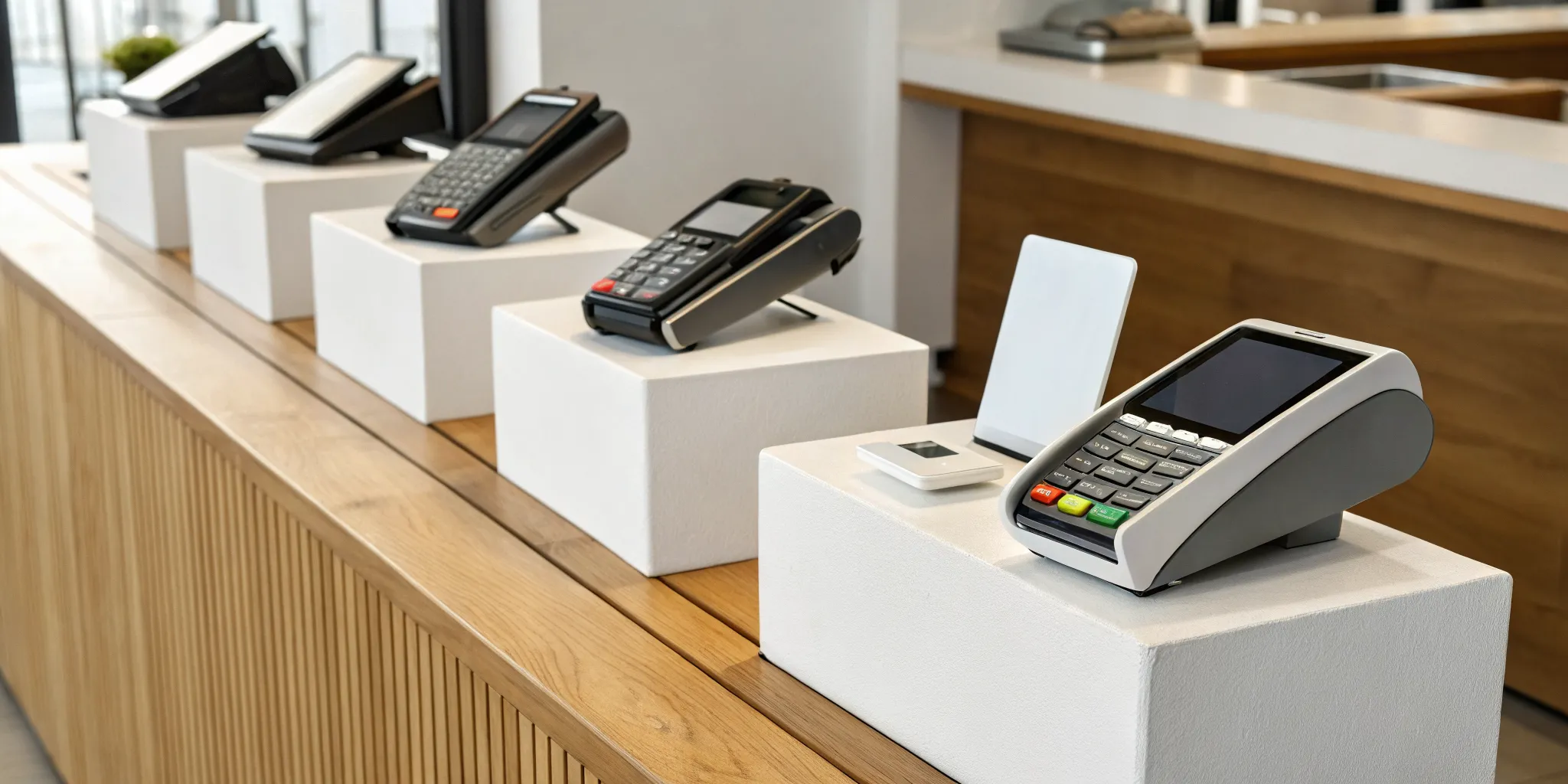
Choosing a credit card terminal isn’t a one-size-fits-all decision. The best machine for a bustling coffee shop will be different from what a freelance photographer needs. Your choice comes down to where you do business and what features will make your life easier. Do you need a sturdy workhorse that lives on your counter, a portable device for sales on the move, or a complete system that helps run your entire operation? Let’s break down the main types so you can find the perfect fit for how you sell.
Countertop Terminals: For Your Storefront
If you run a business from a fixed location like a retail store, salon, or restaurant, a countertop terminal is your reliable go-to. These are the traditional, sturdy machines you typically see at a checkout counter, designed specifically for high-volume environments. They are built for speed and security, handling a constant stream of transactions without breaking a sweat. Because they’re always plugged in and connected to a stable internet source, you get an incredibly reliable way to process payments day in and day out. They’re a straightforward, dependable option for any business that primarily serves customers face-to-face in one spot and needs a machine that just works.
Mobile Terminals: For Sales on the Go
For businesses that don’t stay in one place, mobile terminals are a game-changer. Think food trucks, craft fair vendors, or service professionals who take payments at a client’s home. These small mobile card readers connect directly to your smartphone or tablet via Bluetooth, turning the device you already own into a powerful payment processor. This gives you the ultimate flexibility to accept credit cards anywhere you have a cell signal or Wi-Fi. While some mobile-first solutions can have slightly higher per-transaction fees, the convenience of capturing a sale on the spot, wherever you are, is often well worth the trade-off.
All-in-One POS: The Complete Package
If you’re looking for more than just a payment processor, an all-in-one Point of Sale (POS) system is the answer. This is the command center for your entire business. A modern POS system integrates payment processing with other essential tools, like inventory management, sales reporting, and customer relationship management, all in one place. Some even offer advanced features like offline payment modes, which let you keep making sales even if your internet goes down. It’s a comprehensive solution that helps streamline your daily operations, keep customers happy, and give you valuable insights to grow your business.
How to Lower Your Costs with a Cash Discount Program
Credit card processing fees can take a real bite out of your profits. But what if you could nearly eliminate them? A cash discount program is a smart, straightforward strategy that helps you do just that. By offering a small incentive for customers to pay with cash, you can offset your processing costs and keep more of your hard-earned money. It’s a win-win: your customers get a deal, and you protect your bottom line.
What Are Cash Discount and Dual Pricing Programs?
Let’s break down these game-changing programs. A cash discount program allows you to offer a lower price to customers who pay with cash instead of a credit card. This simple incentive helps you cover the processing fees from card transactions. Think of it as rewarding customers for choosing a payment method that costs you less. A similar strategy, dual pricing, involves listing two distinct prices for every item: a standard card price and a lower cash price. Both approaches are designed to help you reduce card fees and protect your profit margins while being completely transparent with your customers about payment processing costs.
Follow the Rules to Stay Compliant
Before you jump in, it’s incredibly important to know that these programs have rules. Compliance is key to making a cash discount program work for you without causing headaches later. The regulations can vary by state, and major card brands like Visa and Mastercard have their own guidelines you need to follow. The main theme is transparency. You must clearly post signage explaining the program to your customers before they reach the checkout counter. While you should always look for ways to save, doing it the right way protects your business. Taking a little time to understand the rules ensures your program is fair, legal, and effective.
How to Set Up Your Program Correctly
Ready to get started? Setting up your program correctly is straightforward with the right partner and tools. First, you’ll need a payment terminal that’s programmed to handle cash discounts or dual pricing automatically. This technology does the math for you, ensuring every transaction is accurate and compliant. You can find the right hardware by exploring the top credit card terminal offers. Next, train your team so they can confidently explain the pricing to customers. Finally, put up clear signs at your entrance and at the point of sale. A simple, well-executed program can lower your costs without confusing your customers or slowing down your checkout line.
Non-Negotiable Security Features for Your Terminal
When you’re choosing a credit card terminal, it’s easy to focus on the price tag or how it looks on your counter. But the most important features are the ones working behind the scenes to protect you and your customers. Security isn’t just a feature; it’s the foundation of trust. A data breach can be devastating for a small business, so picking a terminal with robust, up-to-date security is one of the most critical decisions you’ll make. Let’s walk through the security features that are absolutely non-negotiable.
EMV: The Gold Standard for Chip Cards
You’ve probably heard the term “chip card,” and the technology that powers it is called EMV. Standing for Europay, MasterCard, and Visa, EMV is the global security standard for card payments. When a customer “dips” their chip card, the terminal creates a unique, one-time code for that specific transaction. This makes it incredibly difficult for fraudsters to counterfeit cards and steal data. If your terminal isn’t EMV-enabled, you could be held liable for fraudulent transactions. That’s why having one of the best credit card terminals with EMV capability isn’t just a good idea; it’s essential for protecting your bottom line.
Protect Data with End-to-End Encryption
Think of end-to-end encryption (E2EE) as a digital armored car for your customers’ payment data. From the moment a card is swiped, dipped, or tapped, E2EE scrambles the sensitive information into an unreadable code. This code stays locked down as it travels from your terminal through the payment networks, only getting decrypted once it safely reaches the payment processor. This process significantly reduces the risk of a data breach. If a hacker were to intercept the data mid-journey, they would only find a jumble of useless characters. This is a core feature of any modern credit card processing system and a must-have for securing your transactions.
Why PCI Compliance Is a Must-Have
PCI compliance might sound technical, but it’s a set of security standards every business that accepts card payments must follow. The Payment Card Industry Data Security Standard (PCI DSS) provides a framework of security standards for protecting cardholder data from theft and fraud. Choosing a terminal and a payment processor that are PCI compliant is your first line of defense. This ensures your systems are configured correctly to handle sensitive information securely. Failing to comply can result in hefty fines and, even worse, a loss of customer trust. A good payment partner will make it easy to stay compliant, so you can focus on running your business.
Keep Tap-to-Pay Transactions Secure
Are contactless payments fast and convenient? Absolutely, as long as your terminal uses the right technology. Tap-to-pay transactions, which use Near Field Communication (NFC), are protected by the same powerful security layers as chip cards. Each tap creates a unique, one-time-use code for the transaction, a process called tokenization. This means your customer’s actual card number is never transmitted or stored by your system. This combination of encryption and tokenization makes tap-to-pay one of the most secure ways to pay. By offering it, you give customers the speed they want without compromising on safety.
How to Find the Best Deal on Your Terminal
Getting the right credit card terminal for your business is one thing, but getting it at the right price is another. The initial cost of the hardware is just the beginning. To find a truly great deal, you need to look at the complete picture, from the price of the machine to the fees you’ll pay on every single transaction. A little bit of research upfront can save you a significant amount of money down the road. Let’s walk through a few key areas where you can find savings and make sure you’re not overpaying.
Look for Hardware Discounts
The price tag on a new terminal can range from under a hundred dollars to over a thousand, but you don’t always have to pay full price. Many payment processors run promotions or offer hardware discounts to new customers. Some might even provide a free terminal when you sign up for a merchant account. While a free device is tempting, make sure you understand the terms. Often, these offers come with a long-term contract or higher processing fees that offset the initial savings. Always ask your potential provider about current promotions and be sure to read the fine print before committing.
Ask About Introductory Offers
The payment processing industry is competitive, and companies want your business. Because of this, many offer special deals to attract new merchants. You might find providers offering your first month of service for free, waiving setup fees, or providing a statement credit after you start processing. Don’t be shy about asking a sales representative what kind of introductory offers are available. Just be sure to clarify what the standard rates and fees will be after the promotional period ends. This helps you budget accurately and ensures there are no surprises on your bill later on.
Find Ways to Save on Processing Fees
A discounted terminal won’t save you much money if you’re stuck with high processing fees. Over time, these recurring costs will have a much bigger impact on your bottom line than the one-time cost of the hardware. Look for a payment partner with transparent and affordable rates. Better yet, ask about programs designed to lower your expenses. For example, a cash discount program allows you to pass on processing fees to customers who choose to pay with a card, rewarding those who pay with cash and effectively reducing your processing costs to nearly zero. This is one of the most effective ways to secure long-term savings.
Making Your Final Choice: A Quick Checklist
Choosing a credit card terminal can feel like a huge decision, but it doesn’t have to be overwhelming. Once you’ve narrowed down your options, running through a final checklist can give you the clarity you need to pick the right one. Think of this as your final gut check to ensure the terminal you choose is a true partner for your business, ready to support you today and as you grow. Let’s walk through the three most important questions to ask yourself before you commit.
Match the Terminal to Your Sales Volume
Your monthly sales volume is one of the biggest factors in finding a cost-effective solution. Some processors, especially those with flat-rate pricing, are a great fit for businesses just starting out or those processing less than $10,000 per month. Their simple fee structures are easy to understand. However, as your business grows, those flat rates can start to eat into your profits. If you’re processing a higher volume of sales, you have more leverage to negotiate credit card processing fees and can often secure a much lower rate with an interchange-plus pricing model. Don’t just plan for the business you have now; consider where you want to be in a year.
Consider Where You Make Sales
Think about your daily workflow. Do you run a brick-and-mortar shop where customers always pay at the counter? A sturdy countertop terminal might be perfect. Or are you constantly on the move, selling at farmers’ markets, making house calls, or running a food truck? In that case, a lightweight and portable mobile card reader is essential. The right hardware should make your job easier, not harder. Look beyond the price tag and consider how the device fits into your sales process. Features like a long battery life, a built-in receipt printer, or a scanner can make a huge difference in your day-to-day efficiency.
Pick a Partner Who Can Grow With You
The cheapest terminal isn’t always the best deal in the long run. You’re not just buying a piece of hardware; you’re choosing a payment processing partner. Look for a provider that offers transparent pricing and can support you as your business expands. A key feature to look for is the ability to integrate with other business tools you rely on, like your accounting software or inventory management system. When your systems can sync automatically, you save countless hours on manual data entry and reduce the risk of human error. Choose a partner who makes your life simpler and is invested in your success.
Related Articles
- How to Buy a Credit Card Terminal with Chip Reader
- 5 Best Credit Card Terminals for Small Business
- Payment Terminal Machine Price: A 2026 Breakdown
Frequently Asked Questions
Is a “free” credit card terminal actually a good deal? A free terminal can be tempting, but it’s rarely ever truly free. Providers often make up for the hardware cost by locking you into a long-term contract with higher-than-average processing fees or hidden monthly charges. It’s always better to ask for a complete fee schedule and compare the total long-term cost, not just the upfront price of the machine. A transparent partner will help you understand all the costs involved.
How do I decide between a mobile reader and a countertop terminal? The best choice really depends on where you make your sales. If you have a permanent checkout counter in a shop or restaurant, a sturdy countertop terminal is your most reliable option. It’s built for high volume and a stable connection. However, if you sell at markets, visit clients in their homes, or run a food truck, a mobile reader that connects to your phone gives you the freedom to take payments anywhere.
What’s the real difference between flat-rate and interchange-plus pricing? Think of flat-rate pricing as the simple, predictable option. You pay the same percentage and fee on every transaction, which is great for new businesses that need easy budgeting. Interchange-plus pricing is more transparent and often more affordable for businesses with higher sales volume. It separates the wholesale cost from the processor’s markup, so you can see exactly what you’re paying for.
My business is small. Do I really need to worry so much about security features? Absolutely. Security is just as important for a small business as it is for a large corporation, maybe even more so. A single data breach can be devastating to your finances and your reputation. Features like EMV chip processing and end-to-end encryption are your essential lines of defense. They protect your customers’ sensitive data and safeguard your business from liability for fraudulent charges.
Besides the terminal itself, what’s the most effective way to lower my credit card processing costs? One of the most powerful strategies is implementing a cash discount or dual pricing program. These programs work by offering your customers a small discount for paying with cash, which helps you offset the fees from credit card transactions. When set up correctly with the right terminal and clear signage, it can reduce your monthly processing bill significantly, putting more money back into your business.