The best credit card machine for a bustling coffee shop is completely different from what a plumber needs to accept payments on a house call. A one-size-fits-all approach simply doesn’t work. Your business model is the most important factor in this decision. Where do you make sales? Do you need a fixed terminal at a checkout counter, or a mobile reader that can go wherever you do? Answering these questions will point you toward the right hardware. We’ll explore the different types of terminals available, from countertop workhorses to flexible mobile readers, to help you find the perfect credit card machine for your small business.
Key Takeaways
- Match your machine to your sales environment: Your business’s daily operations should guide your choice. A fixed checkout counter needs a reliable countertop terminal, while a service business that travels to clients requires a flexible mobile reader.
- Understand the complete cost, not just the sticker price: To accurately budget, look at the three key expenses: the upfront hardware cost, the per-transaction processing fees, and any recurring monthly software or account fees.
- Prioritize security and find a true partner: Essential security features like EMV chip acceptance and end-to-end encryption are non-negotiable. Beyond the tech, choose a provider who offers transparent pricing and accessible support to help your business grow.
How to Choose the Best Credit Card Machine for Your Business
Picking the right credit card machine can feel like a huge decision, but it doesn’t have to be complicated. Think of it like choosing any other essential tool for your business. The best one isn’t necessarily the most expensive or the one with the most buttons; it’s the one that fits how you work. By focusing on a few key areas, you can confidently find a terminal that makes sense for your sales process, your team, and your budget.
First, take a step back and look at your daily operations. Where do you make sales? If you run a coffee shop or a retail store, a sturdy countertop terminal might be perfect. But if you’re a plumber, a landscaper, or a vendor at a farmers market, you’ll need a mobile reader that can go wherever you do. Also, consider your sales volume. A high-traffic business needs a machine that processes payments quickly to keep lines moving, while a boutique with fewer daily transactions might prioritize different features.
Next, think about the features that will make your life easier. At a minimum, your machine should accept all major payment types: chip cards (EMV), swipes, and contactless payments like Apple Pay and Google Pay. Strong security is non-negotiable, so look for built-in encryption and fraud protection tools. You should also consider how the machine will fit into your bigger workflow. Does it need to connect with your Point-of-Sale (POS) system to manage inventory and track customer data? Making sure your hardware and software play nicely together will save you a lot of headaches down the road.
Finally, get a clear picture of the costs involved. It’s more than just the price of the machine itself. You’ll also have processing fees for each transaction and potentially a monthly fee for the service or software. Don’t be afraid to ask for a complete breakdown of all costs so you can avoid surprises. A good payment partner will be transparent about their pricing and help you understand exactly what you’re paying for. By balancing your business needs, essential features, and the total cost, you’ll find the perfect machine to help your business thrive.
Must-Have Features for Your Credit Card Machine
When you’re choosing a credit card machine, it’s easy to get lost in the technical specs. But at the end of the day, this device is one of the most important tools in your business. It’s your digital handshake with every customer, the final step in every sale. A great machine works so smoothly you barely notice it, while a bad one can cause daily headaches, slow down your checkout line, and even cost you sales.
Think of it as more than just hardware; it’s the core of your transaction process. The right terminal should make your life easier, protect your customers’ data, and fit perfectly into your workflow. To find the best fit, you don’t need to be a tech expert. You just need to focus on a few non-negotiable features that separate the best-in-class machines from the rest. Let’s walk through the four essential features every business owner should look for.
Accepts All Payment Types
Your goal is to make it as easy as possible for customers to give you their money. If a customer pulls out their phone to pay and you can only accept physical cards, you risk creating friction or even losing the sale. The best credit card machines are versatile, allowing you to say “yes” to virtually any payment method. This means accepting traditional magnetic stripe swipes, more secure EMV chip cards, and contactless “tap-to-pay” options. These contactless payments, which include services like Apple Pay and Google Pay, are becoming the standard for quick, convenient transactions.
Ironclad Security and Encryption
Protecting your customers’ payment information is one of your biggest responsibilities. A security breach can damage your reputation and result in serious financial penalties. That’s why security isn’t just a feature; it’s a requirement. At a minimum, your machine must be EMV chip compatible. For even stronger protection, look for a device that uses Point-to-Point Encryption (P2PE). This technology scrambles sensitive card data the instant it’s captured, making it unreadable and useless to fraudsters as it travels through the payment network. This level of security is the industry gold standard for keeping transaction data safe.
Seamless POS Integration
A modern credit card machine shouldn’t be a standalone gadget. It should work in harmony with the rest of your business tools. Seamless integration with your Point of Sale (POS) system is a game-changer for efficiency. When your card reader and POS system communicate, every sale automatically updates your inventory, sales reports, and customer records. This eliminates the need for manual data entry, which reduces the chance of human error and frees up your time. You get a clear, real-time picture of your business performance without having to piece together information from different systems.
An Interface Anyone Can Use
The last thing you or your team want to deal with during a busy rush is a complicated piece of technology. A credit card machine should be intuitive and straightforward for everyone to use, from a new hire to a seasoned manager. Look for a terminal with a clear, responsive touchscreen and a simple user interface. The setup process should be quick, and daily functions like processing sales, issuing refunds, and printing receipts should be easy to find. A user-friendly machine reduces training time, minimizes mistakes at the register, and helps your team provide fast, smooth service to every customer.
Breaking Down the True Cost of a Credit Card Machine
The sticker price on a credit card machine is just the starting point. To understand what you’ll actually pay, you need to look at the complete picture, which includes the hardware itself, the fees you’ll pay on every single transaction, and any recurring monthly charges. These three elements make up the true cost of accepting credit cards. Some providers bundle these costs differently, so getting clear on each component is the best way to compare your options and find a solution that truly fits your budget without any surprise expenses down the road. Let’s break down each piece so you know exactly what to look for.
Upfront Equipment and Setup Costs
First up is the cost of the physical hardware. This can vary widely depending on what your business needs. You might find simple mobile card readers that are free or very low-cost, while more advanced, all-in-one terminals can cost over $500. For example, a popular device like the Square Terminal costs around $299 upfront, though some providers offer payment plans to spread out the cost. When you’re comparing machines, think about what features you actually need. A simple reader might be perfect for a pop-up shop, but a bustling cafe will likely need a more robust system.
Per-Transaction Processing Fees
After you have your machine, you’ll pay a small fee every time a customer makes a purchase. This is how payment processors cover the costs of securely moving money from your customer’s bank to yours. These fees are usually a combination of a percentage of the sale and a small flat fee. For in-person transactions, you can expect to see rates around 2.3% to 2.6% plus $0.10 to $0.15. For instance, some of the best credit card readers have a card-present transaction fee of 2.6% + $0.10. While these fees seem small, they add up quickly, so they are a critical factor in your overall cost.
Monthly Fees (and How to Spot Hidden Ones)
Finally, many providers charge a monthly fee for software, support, or account maintenance. Some companies use a straightforward pay-as-you-go model with no monthly fees, while others might require a long-term contract with a recurring charge. This is where you need to be a bit of a detective. Always ask about potential hidden costs, which can include monthly software fees, PCI security program fees, and chargeback fees. It’s also smart to check if there are different fees for various payment methods, like QR codes. A good guide to credit card readers will always advise you to read the fine print before signing anything.
Find the Right Type of Machine for Your Business
Choosing a credit card machine isn’t a one-size-fits-all decision. The best terminal for a bustling coffee shop will be completely different from what a freelance photographer needs to accept payments on location. Your business model is the most important factor. Do you have a fixed checkout counter? Do you sell at farmers markets or make house calls? Answering these questions will point you toward the right hardware.
Think of your credit card machine as a key tool for your business. Just like you’d pick the right hammer for a specific job, you need to pick the right terminal for your sales environment. The goal is to make checkout smooth for your customers and simple for your team. Let’s walk through the main types of machines so you can find the perfect match for how you operate, whether you’re ringing up sales at a counter, on the sales floor, or on the go.
Mobile Readers for Sales Anywhere
If your business is constantly on the move, a mobile credit card reader is your best friend. These are small, lightweight devices that connect directly to your smartphone or tablet via Bluetooth. They allow you to securely accept credit, debit, and contactless payments from virtually anywhere you have a cell signal. This setup is perfect for food trucks, craft fair vendors, plumbers, personal trainers, and any other business that doesn’t have a traditional storefront. With a mobile payment system, you can turn your phone into a powerful point of sale and never miss a sale again.
Countertop Terminals for Your Checkout
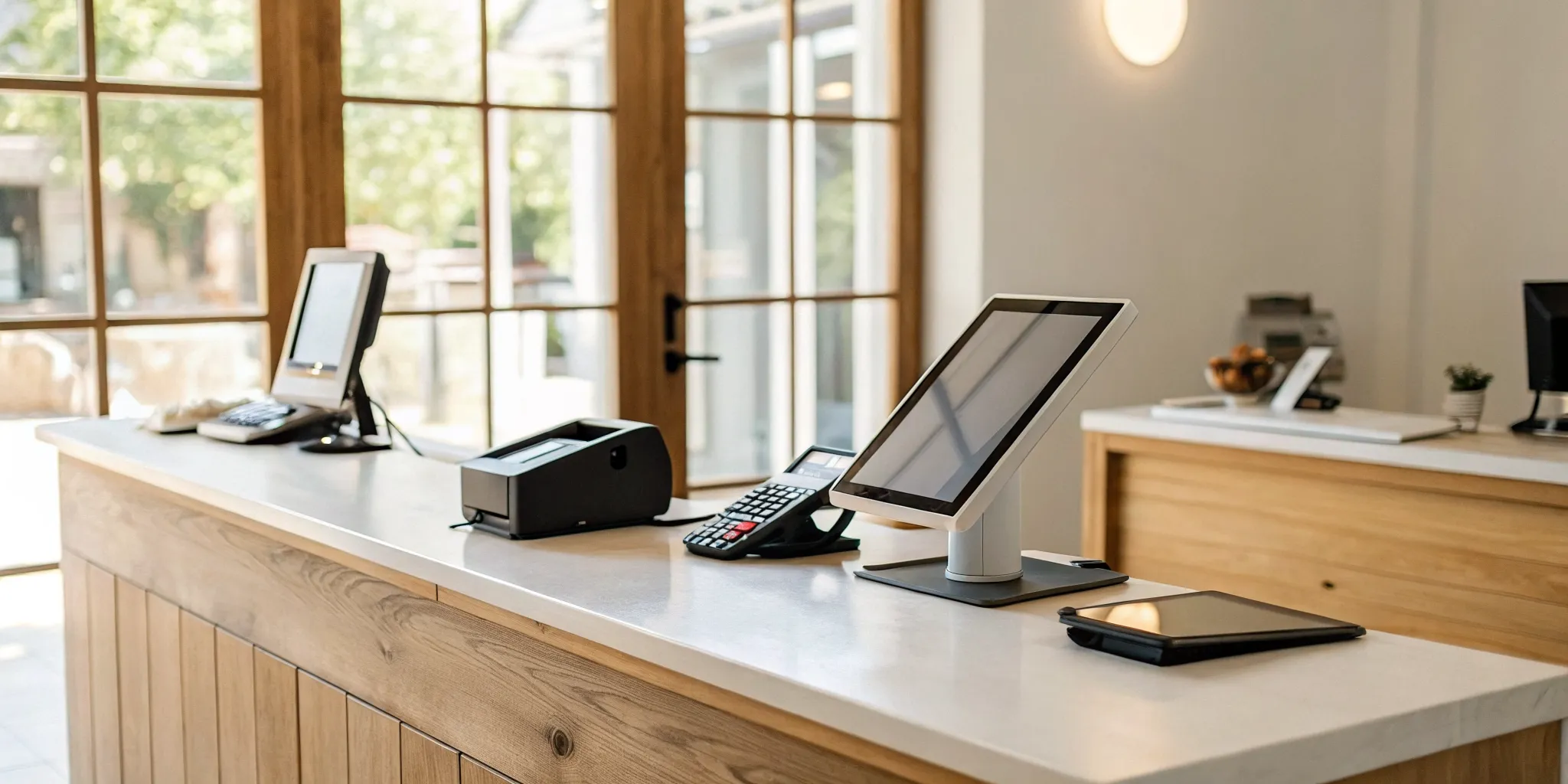
For businesses with a dedicated checkout area, like retail stores, salons, or cafes, a countertop terminal is the classic workhorse. These sturdy machines are designed to sit next to your register and handle a high volume of transactions quickly and reliably. They connect directly to your internet and power source, so you never have to worry about a dead battery during a rush. While they aren’t portable, they offer unmatched speed and dependability for processing swipes, dips, and taps, making them the go-to choice for any business with a fixed point of sale.
Wireless Terminals for Added Flexibility
Wireless terminals offer the best of both worlds: the robust features of a countertop model with the freedom of portability. Unlike smaller mobile readers, these are typically all-in-one handheld devices with a built-in screen and receipt printer. They connect via Wi-Fi or a cellular network, allowing you to take the checkout process directly to your customer. This is ideal for restaurants that want to offer pay-at-the-table service, retailers looking to bust long lines, or auto repair shops that need to process payments in the service bay. They give you the flexibility to complete a sale anywhere on your premises.
All-in-One POS Systems
If you’re looking for a device that does more than just process payments, an all-in-one Point of Sale (POS) system is the answer. These smart terminals often feature large touch screens and powerful software that can manage your entire business. Beyond accepting all payment types, a modern POS system can track inventory, manage employee schedules, run sales reports, and even handle customer loyalty programs. They act as the central command center for your operations, streamlining tasks and giving you valuable insights into your business performance. This is a great option for growing businesses that want to integrate their sales data with other management tools.
Understanding Credit Card Processing Fees
Beyond the cost of the machine itself, the fees you pay on every transaction are a major factor in your total cost. This is where things can get a little confusing, as different providers structure their fees in different ways. But don’t worry, it’s not as complicated as it seems. Understanding the three main pricing models will help you see exactly where your money is going and choose the structure that saves you the most. Let’s break them down.
What is Interchange-Plus Pricing?
Think of interchange-plus as the most transparent pricing model available. With this structure, you see the three core components of every transaction fee. First is the interchange fee, which is a non-negotiable rate paid to the customer’s card-issuing bank (like Chase or Bank of America). Second is the card brand fee, a small percentage that goes to the card network (like Visa or Mastercard). The final piece is your processor’s markup, which is the fee they charge for their service.
Because each component is listed separately on your statement, you get a clear picture of the true cost. This transparency prevents hidden fees and allows you to see exactly what your processor is earning from your business.
Flat-Rate vs. Tiered Pricing
Flat-rate pricing is exactly what it sounds like: you pay one consistent, flat percentage and a small transaction fee on every sale, no matter what type of card your customer uses. This model offers simplicity and predictability, which can be great for new businesses that want to easily forecast their expenses.
Tiered pricing, on the other hand, groups transactions into different categories or “tiers,” usually called qualified, mid-qualified, and non-qualified. The processor assigns a different rate to each tier, but it’s often unclear which transactions will fall into which category. This can lead to confusing statements and unpredictable costs, making it a less transparent option than other payment processing models.
How Dual Pricing and Cash Discounts Can Save You Money
What if you could nearly eliminate your processing fees altogether? That’s the idea behind dual pricing and cash discount programs. With dual pricing, you establish two prices for your products or services: a standard price for card payments and a slightly lower price for cash payments. This gives your customers a clear choice and an incentive to pay with cash.
Similarly, cash discount programs apply a small service fee to all transactions but offer an immediate discount to customers who pay with cash, bringing the price back down to the advertised shelf price. Both strategies are straightforward ways to offset your processing costs by passing the fee to customers who choose the convenience of paying with a card, potentially saving your business thousands of dollars each year.
Choosing a Provider: What Are Your Options?
Picking a payment processor is one of the most important decisions you’ll make for your business. It’s about more than just finding a machine to swipe cards; it’s about choosing a partner who will handle your hard-earned money. The right provider ensures you get paid quickly, keeps your customers’ data secure, and supports you when you need help. The wrong one can cost you in hidden fees, frustrating downtime, and lost sales.
So, where do you start? The world of payment processing is generally split into two main camps: payment aggregators and dedicated merchant accounts. Each has its own way of doing things, with different pricing structures, service levels, and features. Think of it like choosing between a rideshare service and owning your own car. One is quick and easy for occasional trips, while the other offers more control and better value for daily use.
Understanding the fundamental differences between these models is the first step toward finding the perfect fit for your business. We’ll break down what each option means, explore the pros and cons, and help you think beyond the transaction to find a true partner who can help your business grow.
Payment Aggregators vs. Merchant Accounts
When you first start looking for a payment processor, you’ll likely come across payment aggregators like Square and PayPal. These services are popular because they are incredibly easy to set up. They group many small businesses under a single, large merchant account and offer simple, flat-rate pricing for every transaction. This straightforward approach is great for new businesses, freelancers, or anyone who needs to start accepting payments immediately without a lengthy application process.
A dedicated merchant account, on the other hand, is an account that’s set up specifically for your business. This direct relationship with a processor often comes with more transparent and potentially lower-cost pricing structures, like interchange-plus pricing. While the setup might take a little more effort, a merchant account gives you more stability and can save you a significant amount of money as your sales volume grows.
The Pros and Cons of Different Provider Types
Each provider type comes with its own set of trade-offs. Payment aggregators are fantastic for their speed and simplicity. The upfront costs are low, and you know exactly what percentage you’ll pay on every sale. However, that convenience can come at a price. As your business grows, their flat-rate fees can become more expensive than other models. Plus, since you’re sharing an account with thousands of other businesses, you may face stricter rules and a higher risk of account holds or freezes if your activity suddenly changes.
A dedicated merchant account offers more control and better long-term value. The pricing is often more competitive for established businesses, and you get a level of personalized support that aggregators typically can’t match. The main drawback is that the application process can be more involved, and the fee structures can seem complex at first. But for a growing business, the stability and savings are usually well worth it.
Finding a Partner vs. Just a Processor
Ultimately, you’re not just looking for a company to process payments; you’re looking for a partner to help you succeed. The cheapest rate on paper means nothing if you can’t get a human on the phone when a terminal goes down during your holiday rush. Look for a provider that offers reliable, accessible customer support and ensures you get your money deposited quickly.
A true partner also grows with you. They should offer more than just basic processing. Consider whether a provider offers seamless POS integration to help you manage inventory, run sales reports, and build customer loyalty programs. Your payment processor should be a resource that simplifies your operations and supports your goals, not just another bill to pay.
Where to Get Your Credit Card Machine
Once you’ve narrowed down the features you need, the next question is where to actually get your hands on the hardware. You have a few solid options, and the right choice often depends on your business goals, budget, and the level of support you want. Think about whether you prefer a one-stop-shop experience or if you’re willing to do a little more research to find the best deal.
Some business owners like the simplicity of getting everything from one place, while others prioritize finding the lowest possible price on equipment. There’s no single right answer, but understanding your choices is the first step. Let’s walk through the most common places to source your credit card machine and what each path looks like for your business.
Directly From Your Payment Processor
Going directly to a payment processor is one of the most straightforward ways to get your equipment. Companies that provide merchant accounts or processing services often sell or lease the hardware that’s perfectly compatible with their software. For example, providers like Clover offer a whole range of devices, from simple card readers to full-fledged POS systems, designed to work seamlessly with their platform.
The biggest advantage here is simplicity. You know the machine will work with your processor without any headaches, and you’ll have a single point of contact for troubleshooting. The potential downside is that you might be locked into their ecosystem, and the equipment may not be usable if you decide to switch processors later on.
Through an Authorized Reseller
Another great option is to work with an authorized reseller or an independent sales organization (ISO). These are companies that partner with hardware manufacturers and payment processors to sell equipment, often at very competitive prices. Because they aren’t tied to a single brand, they can sometimes offer a wider selection of terminals and provide more objective advice on what might work best for your specific business needs.
Think of a reseller as a consultant who can help you find the right fit. They might also bundle equipment with processing services and offer extra support to get you set up. This route can be a fantastic way to get expert guidance and potentially save some money on the upfront cost of your machine, especially if you find a partner focused on building a long-term relationship.
Watch for Special Offers and Promotions
Regardless of where you decide to buy, always keep an eye out for special offers. The payment processing industry is competitive, and companies often run promotions to attract new merchants. This could look like a free terminal when you sign up for a merchant account, discounted hardware, or waived setup fees. These deals can significantly lower your initial investment, which is a huge plus for any small business.
It’s also smart to pay attention to the terms attached to these offers. Some providers offer flexible, pay-as-you-go options, while others might require a longer-term contract. Reading the fine print ensures you understand the full commitment and can find a promotion that genuinely benefits your business without any hidden surprises down the road.
Matching Your Machine to Your Industry
The best credit card machine isn’t a one-size-fits-all solution. A bustling coffee shop has very different needs than a boutique clothing store or a freelance photographer who meets clients on location. Choosing a terminal that aligns with your industry’s workflow can streamline your operations, keep customers happy, and make your life a whole lot easier. Think about your daily routine: Where do you interact with customers? How fast do you need to process transactions? What features would save you time? Answering these questions will point you toward the perfect setup for your specific business.
What Retail Stores Need
For a retail shop, the checkout counter is the heart of the operation. You need a machine that’s fast, reliable, and incredibly easy for your team to use, especially during busy seasons. Look for user-friendly options with low upfront costs to keep your budget in check. Many modern terminals work seamlessly with smartphones and tablets, offering a sleek and intuitive interface that requires minimal training. The goal is to make the payment process quick and painless for every customer, so you can keep the line moving and focus on making sales. Some of the most popular credit card machines for small businesses are known for exactly these qualities.
Must-Haves for Restaurants and Cafes
The food service industry runs on speed and efficiency. Your payment system needs to keep up with the fast pace of a busy lunch rush or a packed dinner service. Handheld, durable POS systems are a game-changer, allowing your staff to take orders and process payments right at the table. This not only speeds up service but also improves order accuracy and enhances the customer experience. Look for all-in-one solutions that integrate features like tip adjustment, bill splitting, and inventory management, which are essential for running a smooth restaurant, cafe, or food truck operation.
Solutions for Service-Based Businesses
If your business is always on the move, you need a payment solution that can travel with you. Whether you’re a plumber making a house call, a vendor at a farmers market, or a consultant meeting a client, you need the ability to accept payments anywhere. This is where mobile credit card readers come in. These small, portable devices connect directly to your smartphone or tablet, turning your personal device into a secure payment terminal. They allow you to accept credit, debit, and contactless payments on the spot, so you never have to chase down an invoice again.
Essential Security Features to Protect Your Business
When you accept credit cards, you’re also accepting the responsibility of protecting your customers’ sensitive data. A data breach can be devastating for a small business, both financially and in terms of customer trust. The right credit card machine is your first line of defense, equipped with modern technology designed to keep payment information safe from the moment a customer pays. Think of these features as non-negotiable for safeguarding your business and giving your customers peace of mind.
EMV Chips and Contactless Payments
If your credit card machine still relies on a magnetic stripe, it’s time for an upgrade. Modern terminals use EMV chip technology, which creates a unique, one-time code for each transaction. This makes it incredibly difficult for fraudsters to counterfeit cards and steal information. You’ll also want a machine that accepts contactless payments. This allows customers to simply tap their card or use a mobile wallet like Apple Pay or Google Pay. Not only is this method faster and more convenient, but it’s also highly secure because the payment information is tokenized and encrypted. Offering these secure payment options shows customers you’re serious about protecting their data.
End-to-End Encryption and PCI Compliance
Encryption is a critical feature that scrambles card data the instant it’s captured by your machine. Look for terminals that offer end-to-end encryption (E2EE) or point-to-point encryption (P2PE). This process ensures sensitive information is unreadable as it travels from your terminal to the payment processor, protecting it from hackers. Using a machine with these security features is a major step toward achieving PCI compliance. The Payment Card Industry Data Security Standard (PCI DSS) is a set of rules all businesses that accept credit cards must follow. Failing to comply can result in steep fines and penalties, so choosing a secure, compliant machine is essential for protecting your bottom line.
Tools for Fraud and Chargeback Protection
Fraud doesn’t just happen through data breaches. You also need tools to protect your business from disputed transactions and chargebacks. In-person transactions where a customer dips or taps their card are significantly safer than those where card details are manually typed in. For situations where you must key in a card number, your system should support security checks like the Address Verification Service (AVS). It’s also wise to choose a payment partner that provides clear reporting and support to help you manage chargebacks effectively. Finally, good security includes your own internal practices, so make sure your system allows you to set user permissions and control who can access sensitive payment data.
Getting Started With Your New Machine
Once you’ve picked the perfect credit card machine, you’re ready for the final step: getting it up and running in your business. This part is all about a smooth transition, from finalizing your account details to making sure your team feels confident using the new hardware. It might seem like a lot, but breaking it down into a few key steps makes the process straightforward. Think of it as setting the foundation for faster, more secure transactions and happier customers. Let’s walk through what you need to do to get your new machine ready for its first sale.
Your Account Setup and Approval
Before you can swipe the first card, you’ll need to get your merchant account set up and approved. This is the engine that powers your machine, connecting it to the payment networks that make transactions happen. During this process, your provider will verify your business details and finalize your processing rates. Most providers charge a percentage plus a small fixed fee per transaction. While these rates vary, understanding them is key to managing your costs. Some processors offer a simple pay-as-you-go model, while others might have a monthly subscription or a longer-term merchant agreement. Make sure you know which structure you’re signing up for so there are no surprises later.
Training Your Team and Getting Support
Your new machine is only as good as the people using it, so getting your team comfortable is a top priority. A smooth checkout experience depends on your staff knowing how to process different payments, handle returns, and troubleshoot minor issues. Most providers offer setup guides and tutorials to make training easy. It’s also a great time to talk about security. If your machine uses advanced features like Point-to-Point Encryption (P2PE), explain to your team how it keeps customer data safe from the moment a card is used. And don’t forget about ongoing support. A reliable partner should be there to help when you need it, whether it’s over the phone, via email, or through a 24/7 help center.
Related Articles
Frequently Asked Questions
What’s the most important thing to consider when choosing a credit card machine? The most important factor isn’t a single feature, but how the machine fits your specific business operations. Start by thinking about where you make your sales. If you have a fixed checkout counter, a sturdy countertop terminal is a great choice. If you’re a mobile business like a food truck or a plumber, a portable reader that connects to your phone is essential. Your sales volume also matters; a busy shop needs a fast machine to keep lines moving, while a service-based business might prioritize other features.
With all the different fees, how do I know which pricing model is best for my business? It generally comes down to simplicity versus transparency. Flat-rate pricing, where you pay a single percentage on every transaction, is predictable and great for new or low-volume businesses. Interchange-plus pricing, which separates the bank’s fees from the processor’s markup, is more transparent and often becomes more cost-effective as your sales grow. If your goal is to nearly eliminate fees, programs like dual pricing or cash discounts are also excellent options to explore.
Do I really need a full POS system, or is a simple card reader enough? A simple card reader is perfect if your only goal is to accept payments quickly and securely. However, if you want a tool that helps you run your entire business, an all-in-one POS system is the way to go. These systems do more than process transactions; they can also track your inventory, manage customer information, handle employee schedules, and provide detailed sales reports, acting as the central hub for your operations.
What’s the real difference between using a service like Square and getting a dedicated merchant account? Think of it as speed versus stability. Payment aggregators like Square are incredibly fast to set up and offer simple, predictable pricing, which is perfect for new businesses or freelancers. A dedicated merchant account is an account established just for your business. While the application is more involved, it often provides more competitive rates as you grow, greater account stability, and more personalized customer support.
If I buy a credit card machine, can I use it if I decide to switch payment processors later? This is a great question, and the answer is: it depends. Often, when you get a machine directly from a payment processor, it’s programmed to work only with their service. This can make switching difficult. If you value flexibility, consider buying an “unlocked” terminal from an authorized reseller. This gives you the freedom to choose a new payment partner in the future without having to buy new hardware.