Your credit card terminal should do more than just accept payments; it should actively help you save money. Many business owners get locked into expensive contracts or pay high fees simply because the hardware seemed cheap or even “free” upfront. The true cost of a terminal is tied to your processing rates and any hidden monthly charges. Understanding this is the first step to protecting your profits. In this guide, we’ll explore how different pricing models work and how the right hardware can support cost-saving programs. We’ll show you how to find the best credit card terminals for small business that work for your bottom line.
Key Takeaways
- Match the terminal to your business needs: Think about your daily sales volume, where you take payments, and your future goals. The right device should support your specific workflow, whether you need a portable reader for markets or a fast countertop model for a busy shop.
- Look beyond the hardware’s price tag: The real cost of a terminal includes transaction fees and other monthly charges. Compare pricing models like flat-rate and interchange-plus, and always ask for a complete list of fees to avoid hidden costs.
- Prioritize security and smart features: Your terminal must accept EMV chip and contactless payments to protect your business and meet customer expectations. Also, choose a device that syncs with your other software, like inventory or accounting tools, to save time and reduce manual work.
How to Spot a Great Credit Card Terminal
Choosing a credit card terminal can feel like a small decision, but it has a big impact on your daily operations and customer happiness. The right device makes checkouts smooth and your life easier, while the wrong one can cause daily headaches. Before you get swayed by a sleek design or a low price tag, it’s important to know what features actually matter. Think of it like hiring a new employee: you want someone reliable, efficient, and easy to work with. Here are the key qualities to look for in a great credit card terminal.
Durability and Portability
Your terminal is going to be one of the hardest-working pieces of equipment in your business. For busy retail stores or restaurants, it needs to be tough enough to handle the occasional drop, spill, or frantic rush hour. A flimsy device just won’t cut it. Look for a terminal that feels solid and is built for a commercial environment, not just occasional use.
Beyond toughness, consider where you’ll be taking payments. Portability isn’t just for food trucks or market stalls anymore. A wireless, handheld terminal allows you to bring the checkout directly to your customers, whether that’s at their table in a restaurant or on the sales floor to prevent long lines. This flexibility can seriously improve your customer flow and overall experience.
Speedy Transactions
Nothing kills the vibe of a great customer experience like a long, slow checkout line. A sluggish terminal that takes forever to process a payment can frustrate both your customers and your staff. Fast, reliable transactions are essential for keeping things moving and leaving a positive final impression. When a customer is ready to pay, the process should be nearly instant.
This speed comes from a combination of a fast internet connection and a terminal with good processing power. A device that lags or takes several seconds to read a chip card will become a bottleneck during your busiest hours. A great terminal should enhance efficiency and make the payment process so seamless that your customers barely notice it, which is exactly what you want.
Flexible Payment Options
These days, customers expect to pay their way. If your terminal only accepts one or two types of payments, you risk creating friction at the checkout or even losing a sale. A modern terminal should be ready for anything. This means it absolutely must accept EMV chip cards, which are the standard for security.
But it doesn’t stop there. You also need the ability to accept contactless payments. This includes tap-to-pay credit cards and mobile wallets like Apple Pay and Google Pay, which are powered by Near Field Communication (NFC) technology. Offering these options isn’t just a nice-to-have feature; it’s about meeting modern customer expectations and showing that your business is up-to-date.
Easy Software Integration
Your credit card terminal shouldn’t operate on an island. For your business to run smoothly, your payment device needs to communicate with your other essential software. Think about your point-of-sale (POS) system, inventory management tools, and accounting software. A terminal that integrates seamlessly with these systems saves you from hours of manual data entry and reduces the risk of human error.
When your terminal and POS system work together, sales data, inventory levels, and customer information are updated automatically. This gives you a clear, real-time view of your business performance without having to reconcile reports from different platforms. This kind of streamlined data management is key to making smart, informed decisions as you grow.
Comparing the Top Credit Card Terminals
Okay, let’s talk hardware. Choosing the right credit card terminal can feel like a huge decision, but it doesn’t have to be overwhelming. The key is finding a device that fits your specific business needs, from how you sell to how much you sell. Think of it like buying a car: a sports car is great, but not if you need to haul lumber. The same logic applies here. The flashiest terminal isn’t always the best one for your bottom line. To make it easier, I’ve broken down some of the most popular options out there. We’ll look at what makes each one unique, who it’s best for, and what you can expect in terms of features and costs. This way, you can see how they stack up and feel confident in your choice.
MBNCard Payment Solutions
At MBNCard, we approach things a bit differently. Instead of offering a single, one-size-fits-all device, we focus on providing payment solutions that are tailored to your business. We help you select from a range of top-tier credit card machines designed for security and efficiency. Our goal is to match you with hardware that supports programs like our dual pricing program, which can significantly lower your processing costs. We believe your terminal should do more than just take payments; it should actively save you money. Because we prioritize personalized service, you get a partner dedicated to finding the perfect fit for your sales environment, whether you run a busy retail shop or a service-based business.
Square Terminal
You’ve probably seen the Square Terminal in local coffee shops and boutiques, and for good reason. It’s an all-in-one device that’s incredibly user-friendly, with a built-in screen and receipt printer. The setup is straightforward, making it a popular choice for new business owners. Square uses a flat-rate pricing model of around 2.6% + 10 cents for every tapped, dipped, or swiped transaction. This simple fee structure is often a great starting point for businesses processing less than $10,000 per month, as it keeps costs predictable without any monthly fees or long-term contracts. It’s a solid, no-fuss option for getting up and running quickly.
Clover Flex
If you need a terminal that can move with you, the Clover Flex is a strong contender. This handheld device is more than just a card reader; it’s a mini point-of-sale system that lets you manage inventory, track employees, and run reports from anywhere in your store. It accepts all major payment types, including chip, tap, and swipe, and its sturdy design holds up well to daily use. This is perfect for restaurants that want to take payments at the table or retailers who want to bust lines on a busy Saturday. One thing to keep in mind is that setting up a Clover Flex often requires you to work with a specific merchant account provider, so it’s not as plug-and-play as some other options.
Toast Go
For anyone in the food and beverage industry, the Toast Go is a name you’ll hear often. This handheld terminal is built specifically for the chaos of a busy restaurant. It’s spill-proof, drop-proof, and designed for fast-paced ordering. The real power of Toast Go comes from its integration with the complete Toast restaurant management system, which helps you manage everything from tableside ordering and online delivery to kitchen workflows and staff scheduling. It’s a specialized tool, so it’s the perfect fit if you’re running a restaurant, but it’s not intended for retail or other business types. If you need to fire orders to the kitchen instantly, this is your device.
SumUp Solo
If your business is just starting out or you only process occasional card payments, the SumUp Solo is worth a look. This compact, portable reader is one of the most affordable options on the market. Its main appeal is the simple, pay-as-you-go pricing with no monthly fees, making it ideal for artisans at craft fairs, mobile service providers, or any business with low transaction volume. The device itself is sleek and easy to use, connecting to your phone or tablet to process payments. While it lacks the advanced features of a full POS system, it delivers on its promise of simple, on-the-go payment acceptance.
PayPal Zettle
For the millions of businesses already using PayPal for online sales, the PayPal Zettle reader is a natural extension for in-person transactions. Its biggest advantage is the seamless integration with your existing PayPal Business account, allowing you to see all your funds in one place. Zettle offers competitive flat-rate transaction fees and, like its parent company, provides quick access to your money. It’s a straightforward and reliable option, especially if you appreciate the familiarity and trust associated with the PayPal brand. The hardware is simple, connecting to a smartphone or tablet to run the POS app, making it a logical next step for heavy PayPal users.
What Will a Credit Card Terminal Really Cost You?
When you’re shopping for a credit card terminal, the price tag on the hardware is just the starting point. The true cost of accepting payments is a combination of the initial equipment price, ongoing transaction fees, and any other charges that might be tucked away in your contract. Understanding these three components is the key to protecting your profit margins and finding a payment solution that actually works for your bottom line. Let’s break down what you can expect to pay.
The Upfront Hardware Cost
It’s easy to get drawn in by “free” terminal offers, but it’s smart to approach them with a healthy dose of skepticism. Often, these deals lock you into a long-term contract with higher processing fees that end up costing you more over time. Instead of just grabbing the cheapest option, think about what your business actually needs. Do you need a portable device for markets, or a sturdy countertop model? A free terminal that doesn’t fit your workflow isn’t a good deal. Think of the hardware as an investment in your business’s efficiency. Choosing the right tool for the job will always pay off in the long run.
How Transaction Fees Work
Every time a customer pays with a card, a small percentage of that sale goes toward processing fees. While these fees might seem tiny on their own, they can add up and take a significant bite out of your revenue. These rates aren’t set in stone; they often depend on your sales volume and the pricing model you choose, like Interchange-Plus or flat-rate. If your business processes a high volume of sales, don’t be afraid to negotiate for better rates. A good payment processor will work with you to find a structure that helps you keep more of your hard-earned money.
Watch Out for Hidden Fees
This is where things can get tricky. The most frustrating costs are the ones you don’t see coming. Some processors add extra charges that can inflate your monthly bill, like statement fees, batch processing charges, or early termination fees if you decide to switch providers. You might also see a penalty for not meeting PCI compliance standards, which are rules designed to keep customer data safe. Before you sign any agreement, ask for a complete list of all potential fees. A transparent partner will be upfront about every charge, ensuring there are no surprises on your statement.
Flat-Rate vs. Interchange-Plus: Which Saves You More?
Choosing a pricing model for credit card processing can feel complicated, but it really comes down to your sales volume and what you value most: simplicity or savings. Flat-rate pricing offers predictability, while interchange-plus provides transparency that can lead to significant savings as your business grows. Understanding the difference is the first step to making sure you’re not overpaying on transaction fees. Let’s break down which model makes the most sense for your business right now.
When to Choose Flat-Rate Pricing
Flat-rate pricing is exactly what it sounds like: you pay one consistent rate for every transaction, such as 2.6% + 10 cents. This model is straightforward and makes it easy to predict your monthly processing costs. If your business is just starting out or processes less than $10,000 in card sales per month, flat-rate can be a great choice. You don’t have to worry about the different interchange rates for various card types. The simplicity is the main draw, as it removes the guesswork from your monthly statement. It’s a solid, no-fuss option for new and low-volume businesses that prioritize predictable expenses over getting the lowest possible rate on every single swipe.
Why Interchange-Plus Often Wins for Higher Volume
Once your business starts processing more than $10,000 a month, it’s time to look at interchange-plus pricing. This model separates the non-negotiable interchange fee (which goes to the card-issuing bank) from the processor’s markup. This transparency means you can see exactly what you’re paying and why. Because the processor’s markup is a fixed percentage, you benefit directly from lower-cost transactions, like those made with debit cards. For businesses with higher sales volume, this model almost always results in lower overall costs. The clear breakdown of fees also makes it easier to compare different processors and ensure you’re getting a fair deal.
How to Do the Math for Your Business
To figure out what’s best for you, start by looking at your last few months of sales. If you consistently process over $50,000 per year, you’re in a strong position to get a better deal with an interchange-plus plan. Grab your most recent processing statement and look at your total fees versus your total sales. If your effective rate (total fees divided by total sales) is pushing 3% or higher on a flat-rate plan, you could likely save money by switching. Always review your statements carefully for any hidden charges or creeping fees. A good payment partner will walk you through your statement and show you exactly how a different pricing model could lower your costs.
Find the Right Terminal for Your Business Type
The “best” credit card terminal isn’t a one-size-fits-all solution. The right choice depends entirely on how and where you do business. A bustling restaurant has completely different needs than a pop-up shop at a farmers market, and your payment hardware should support your unique workflow. Thinking about your daily operations is the key to picking a terminal that helps you, rather than holds you back. Let’s look at a few common business types and the terminals that are designed to make their lives easier.
For On-the-Go Sales: Mobile Readers
If your business is always on the move, a mobile reader is your best friend. Perfect for food trucks, craft fair vendors, or service professionals who visit clients (like plumbers or personal trainers), these compact devices pair with your smartphone or tablet. This setup turns the phone you already own into a powerful point of sale. You can securely accept credit cards anywhere you have a cell signal or Wi-Fi connection. This flexibility is essential for any mobile business that operates without a fixed storefront, ensuring you never miss a sale just because you’re away from a traditional counter.
For Retail Shops: Countertop Terminals
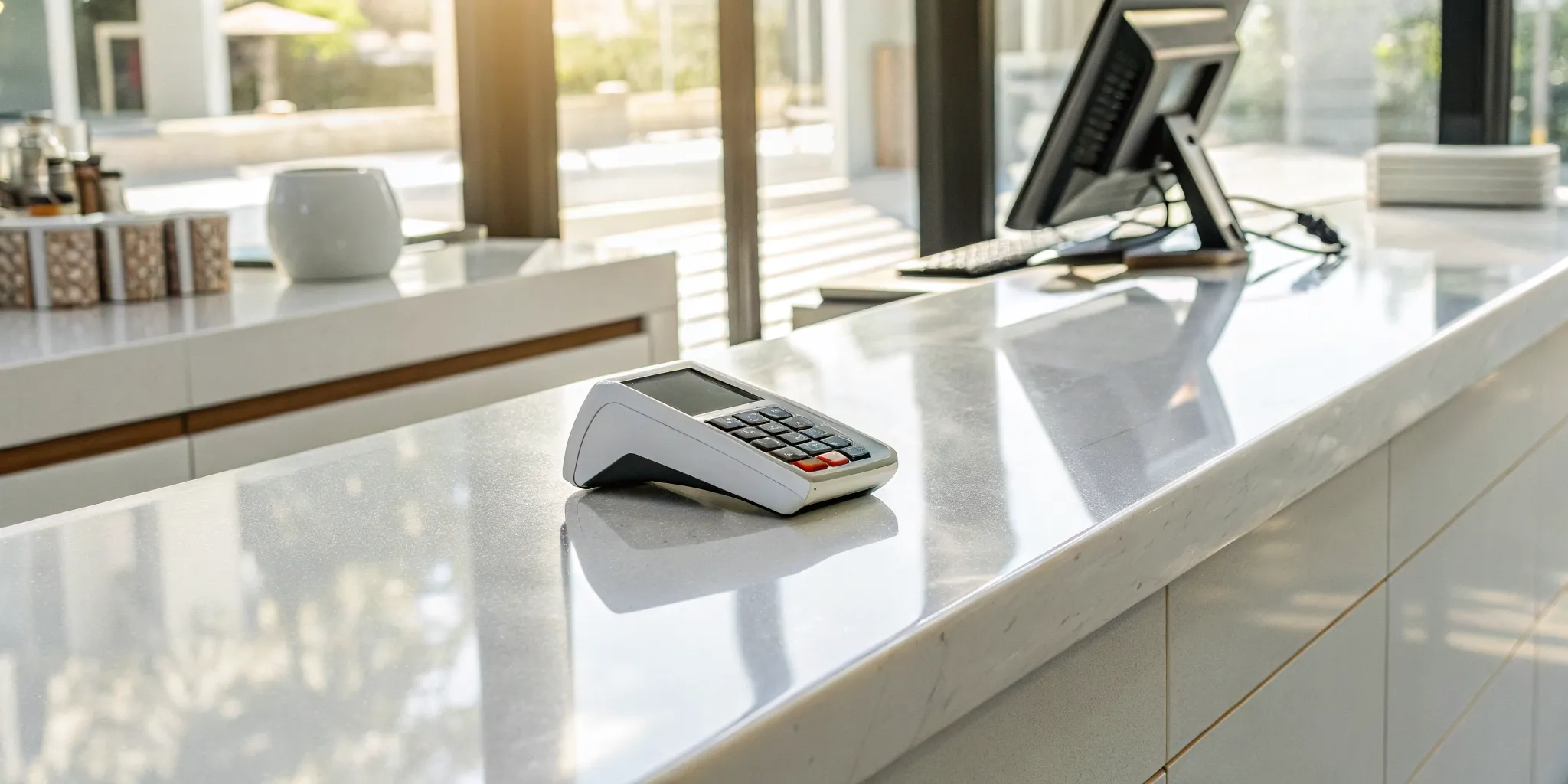
In a busy retail environment, speed and reliability are non-negotiable. When a line of customers forms, you need a workhorse that can process payments without a hitch. Countertop terminals are built for exactly this scenario. They are designed for high-volume, fast transactions that keep the checkout line moving, even during your busiest holiday rushes. These terminals are robust, connect directly to your power source and internet, and often feature large, easy-to-use keypads and clear customer-facing displays. They are the dependable heart of a retail checkout station, ensuring every sale is quick and secure.
For Restaurants: Handheld Devices
If you run a restaurant, you know that efficiency is crucial for turning tables and keeping diners happy. Handheld payment devices can completely transform your service for the better. Instead of making customers wait while a server runs their card to a stationary terminal, your team can take orders and process payments right at the table. Modern handhelds are built for the tough restaurant environment, often featuring spill-proof designs and long battery life. When integrated with a restaurant POS system, they create a seamless flow from ordering to payment, resulting in faster service and happier guests.
For Growth: All-in-One Systems
If you have big plans for your business, you need a system that can scale with you. All-in-one smart terminals are a fantastic choice for ambitious owners. These devices combine a modern touchscreen, card reader, and receipt printer into a single, sleek unit, so you don’t need a separate tablet or phone to operate. They provide a highly professional checkout experience right out of the box. More importantly, they run on powerful software that can handle everything from sales and inventory to customer management. This makes them a smart investment for any business looking to build a strong foundation for future growth.
Non-Negotiable Features for Your Terminal
When you’re comparing credit card terminals, it’s easy to get lost in the details. But some features aren’t just nice to have; they’re essential for running a secure, efficient, and customer-friendly business. Think of these as your baseline requirements. If a terminal you’re considering doesn’t check all of these boxes, it’s probably not the right fit for your business in the long run. Getting these fundamentals right from the start will save you countless headaches and help you build a smoother operation.
EMV Chip & Contactless Payments
In today’s market, accepting chip cards and contactless payments isn’t just a bonus; it’s an expectation. EMV chip technology provides critical security by creating a unique code for each transaction, making it much harder for fraudsters to steal card data. At the same time, Near Field Communication (NFC) enables tap-to-pay options like Apple Pay and Google Pay. These contactless payments are not only what many customers prefer for speed and convenience, but they also help you move lines faster. A modern terminal must support both to protect your business and keep your customers happy.
Built-in Receipt Printer
While digital receipts are great, don’t underestimate the power of a physical one. A terminal with a built-in receipt printer looks professional and provides customers with immediate proof of purchase, which builds trust. It’s far more efficient than fumbling with a separate, clunky printer that needs its own power source and connection. Having a built-in printer also serves as a reliable backup if a customer’s email is entered incorrectly or they simply prefer a paper copy for their records. It’s a small feature that makes a big difference in creating a smooth and satisfying checkout experience.
Simple Inventory Syncing
Your payment terminal shouldn’t just process sales; it should help you run your business. A terminal that offers simple inventory syncing is a game-changer for efficiency. Instead of manually tracking what you’ve sold, the terminal automatically updates your stock levels in real-time as each purchase is made. This integration helps you avoid the nightmare of selling an item you don’t have and gives you a clear picture of what’s popular and what needs reordering. By choosing a terminal that syncs with your inventory management system, you can streamline your operations and make smarter business decisions without the extra work.
Top-Notch Security and PCI Compliance
This is the most important feature on the list. Every business that accepts credit cards must follow a set of security rules known as the Payment Card Industry Data Security Standards (PCI DSS). These standards are in place to protect sensitive customer card information from theft. Using a terminal that is not PCI compliant exposes your business to massive fines, legal trouble, and a complete loss of customer trust. You don’t need to be a security expert, but you absolutely need a terminal and a payment partner that takes compliance seriously. This ensures both you and your customers are protected with every transaction.
Common Myths About Terminals That Cost You Money
The world of payment processing can feel like a maze of jargon and confusing fee structures. Unfortunately, this confusion can lead to costly mistakes for your business. Believing a few common myths about credit card terminals and processing fees might be costing you more than you think. Let’s clear the air and debunk four misconceptions that could be hurting your bottom line.
Myth #1: “Free” processing is actually free
It’s tempting to jump on an offer for “free” credit card processing, but it’s rarely that simple. The truth is, processing payments always has a cost. When a provider advertises a free service, those fees are often just shifted somewhere else. You might see them in the form of higher equipment rental costs, inflated monthly software fees, or a contract that locks you into unfavorable terms. Furthermore, every business that accepts credit cards must maintain PCI DSS compliance to protect customer data, which involves its own set of responsibilities and potential costs. True transparency means understanding exactly where every dollar goes, not hiding fees behind the word “free.”
Myth #2: You can’t do anything about chargebacks
Feeling helpless about chargebacks is a common sentiment, but you have more power than you think. While you can’t stop every single dispute, you can significantly reduce their frequency and fight them effectively when they happen. Start by using a modern terminal that accepts EMV chip cards and contactless payments, as this shifts fraud liability away from you. Keep detailed records of transactions and customer interactions. A good payment partner can also provide tools and support to help you manage disputes and win more cases. Chargebacks are not just a cost of doing business; they are a manageable risk.
Myth #3: Flat-rate is always the cheapest option
Flat-rate pricing is popular because it’s easy to understand: you pay one consistent rate for every transaction. While this predictability is nice, it often comes at a higher price. For many businesses, an Interchange-plus pricing model is a more affordable alternative. This model combines the non-negotiable interchange fee (paid to the card-issuing bank) with a small, fixed markup for the processor. Because the markup is transparent, you can see exactly what you’re paying for. While flat-rate can be a good starting point, businesses with steady or growing sales volume often find they save a lot more with this transparent structure.
Myth #4: Dual pricing programs are too complicated
Many business owners worry that dual pricing programs, which offer customers different prices for cash and card payments, are too complex or even illegal. This is a common misconception. Dual pricing is perfectly legal as long as you are transparent with your customers. You simply need to display both prices clearly at the point of sale. Modern POS systems and credit card terminals make this incredibly easy to manage. The software automatically applies the correct price based on the payment method, so there’s no extra work for your staff. It’s a straightforward way to offset your processing costs without the hassle.
How to Choose the Perfect Terminal in 3 Steps
Picking a credit card terminal can feel overwhelming with all the options out there. But it doesn’t have to be complicated. Instead of getting lost in technical specs, let’s simplify the process. By focusing on your business’s unique needs, you can confidently choose a terminal that works for you, not against you.
Here are three straightforward steps to find the perfect fit for your business.
Step 1: Check Your Sales Volume
First, think about how busy you are. A business with a constant line of customers has very different needs than one with a few large sales per day. If you run a high-volume shop, like a bustling cafe or a popular retail store, you need a robust terminal that processes transactions in a flash. Speed and reliability are your best friends here, as a slow terminal can lead to long lines and frustrated customers. A terminal that can handle a high number of transactions is crucial for maintaining a great operational flow. On the other hand, if your business has a slower, more relaxed pace, you might not need the most powerful machine on the market and can prioritize other features or a lower upfront cost.
Step 2: Define Your Mobility Needs
Next, consider where you make your sales. Are you always in one spot, or does your business take you on the road? If you have a traditional brick-and-mortar store, a countertop terminal that stays put at the checkout counter is a solid choice. But if you’re a vendor at farmers markets, a food truck owner, or a service provider who visits clients’ homes, you need flexibility. Mobile payment terminals are perfect for businesses on the go, allowing you to accept payments directly from a smartphone or tablet. Even restaurants are adopting handheld devices to offer convenient pay-at-the-table service. Think about your daily workflow and choose a terminal that moves with you.
Step 3: Plan for Future Growth
Finally, think about where your business is headed. It’s tempting to choose the cheapest, most basic option for the business you have today, but that can be a shortsighted move. Your credit card terminal is an investment in your future. As your business expands, your needs will change. Will you want to integrate with inventory management software, start a customer loyalty program, or sync with an online store? Choosing a scalable terminal now saves you the headache and expense of having to switch systems later. The right terminal not only provides secure transactions but also creates a smoother payment process that improves the customer experience, which is essential for sustainable growth.
Your Go-To Guide for a Smooth Terminal Setup
Getting your new credit card terminal up and running is an exciting step. It means you’re ready to welcome more customers and make sales. While it might seem like you can just plug it in and go, there are a few simple steps to ensure everything works perfectly from day one. Think of it less as a technical chore and more as setting the foundation for a seamless checkout experience for your customers and your team. A smooth setup process isn’t just about technology; it’s about creating confidence. When your terminal works flawlessly and your team knows how to use it, transactions are faster, customers are happier, and you can focus on running your business instead of troubleshooting tech issues.
This process generally breaks down into three main parts: getting your merchant account approved, setting up the physical hardware, and training your staff so they feel confident using it. It’s all very straightforward, and walking through these steps will help you avoid any little hiccups down the road. We’ll cover exactly what you need to do for each stage, from the initial application to the first successful transaction. By taking a little time to get organized now, you’re investing in the long-term health and efficiency of your business. Let’s get you set up for success.
Getting Your Account Approved
Before you can swipe a single card, you need a merchant account. Many business owners don’t realize that a payment processor, the company that facilitates the transaction, needs to approve your business first. This involves a quick application where they review details like your business type, estimated sales volume, and industry risk factors. It’s a standard underwriting process to ensure everything is secure and legitimate.
Working with a dedicated provider makes this step much easier. Instead of figuring it out alone, you’ll have someone to walk you through the paperwork and answer your questions. Our goal at MBNCard is to make this approval process as fast and painless as possible so you can start accepting payments right away.
Configuring Your New Hardware
Once your account is approved, it’s time to unbox your new terminal. The right hardware is key to a smoother payment process and a better customer experience. Your first tasks will be connecting the device to the internet via Wi-Fi or an Ethernet cable and loading the first roll of receipt paper.
From there, you’ll want to connect it to your other business tools. If you have a point-of-sale (POS) system or inventory management software, integrating your terminal is a must. This syncs your sales data automatically, saving you from manual entry and preventing errors. Taking a few minutes to configure these settings properly ensures your daily operations run without a hitch.
Training Your Team and Finding Support
A great terminal is only as good as the people using it. Take some time to walk your team through the new device. Show them how to run different transactions, like contactless tap, EMV chip, and swipe payments. It’s also smart to cover how to process a refund or void a sale. When your staff feels confident, it enhances efficiency and leaves customers with a great impression.
Finally, make sure everyone knows who to call for help. Post the support number near the terminal so you can get quick answers if you run into any issues. And one last tip: always review your monthly statements. This helps you understand your costs and spot any unexpected fees, ensuring your payment processing remains transparent and affordable.
Related Articles
- Top 6 Contactless Payment Terminals for Small Business
- 5 Best Credit Card Terminals for Small Business
- How to Accept Credit Cards for Small Business in 4 Steps
Frequently Asked Questions
Are “free” credit card terminals actually free? It’s smart to be skeptical of “free” hardware offers. While you might not pay for the device upfront, the cost is often hidden elsewhere. These deals can lock you into long-term contracts with high processing fees or expensive monthly software charges that cost you much more over time. A transparent payment partner will be clear about all costs, helping you understand that the best value comes from a fair overall price, not just a free piece of equipment.
I’m a small business. Should I use flat-rate or interchange-plus pricing? Flat-rate pricing is a great starting point if your business is new or processes less than $10,000 in card sales each month. It offers simplicity and predictable costs, which is perfect when you’re just getting started. However, once your sales volume grows, you will almost always save money with an interchange-plus plan. This model is more transparent and allows you to benefit from lower rates on certain types of cards, helping you keep more of your revenue.
With so many options, how do I choose the right terminal for my specific business? Instead of focusing on brand names, think about your daily workflow. Do you need to take payments at a table or on a sales floor? A portable, handheld device is your best bet. Do you have long lines at a checkout counter? A fast, durable countertop model is essential. The best terminal is one that fits how you operate, making your job easier and the customer’s experience smoother.
How important is security and PCI compliance when choosing a terminal? It is the most important factor, period. Using a terminal that is secure and PCI compliant is not optional; it’s a fundamental requirement for protecting your customers’ sensitive card data. Failing to meet these standards can expose your business to devastating fines, legal action, and a total loss of customer trust. A reliable payment partner will ensure your hardware and software meet these critical security standards from day one.
Why does MBNCard focus on a “payment solution” instead of just selling one type of terminal? We believe that a one-size-fits-all approach doesn’t work for small businesses. Your business is unique, and your payment setup should be too. Instead of pushing a single device, we get to know your specific needs, sales volume, and goals. Then, we match you with the right combination of hardware, software, and a pricing program like dual pricing. This tailored approach ensures you get a solution that not only works efficiently but also actively saves you money on processing fees.